Starter
Plug-and-play kit
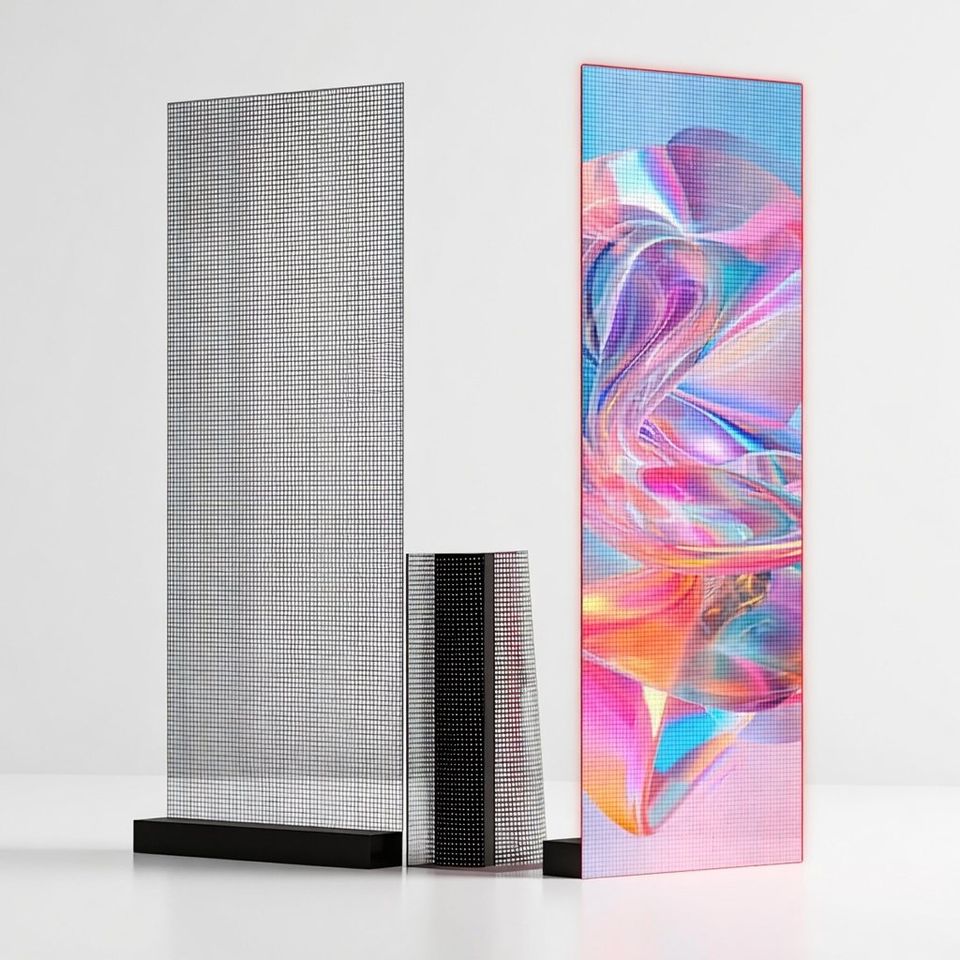
240 × 600 mm or 400 × 1000 mm panel with controller and power supply in the box. The cheapest honest way to test transparent LED film on your own glass.

This self-adhesive transparent LED film bonds directly onto the glass you already have. No frame, no cabinet, no drilling — a squeegee and an afternoon turn any window into a see-through screen that all but disappears when it is off.

What it is
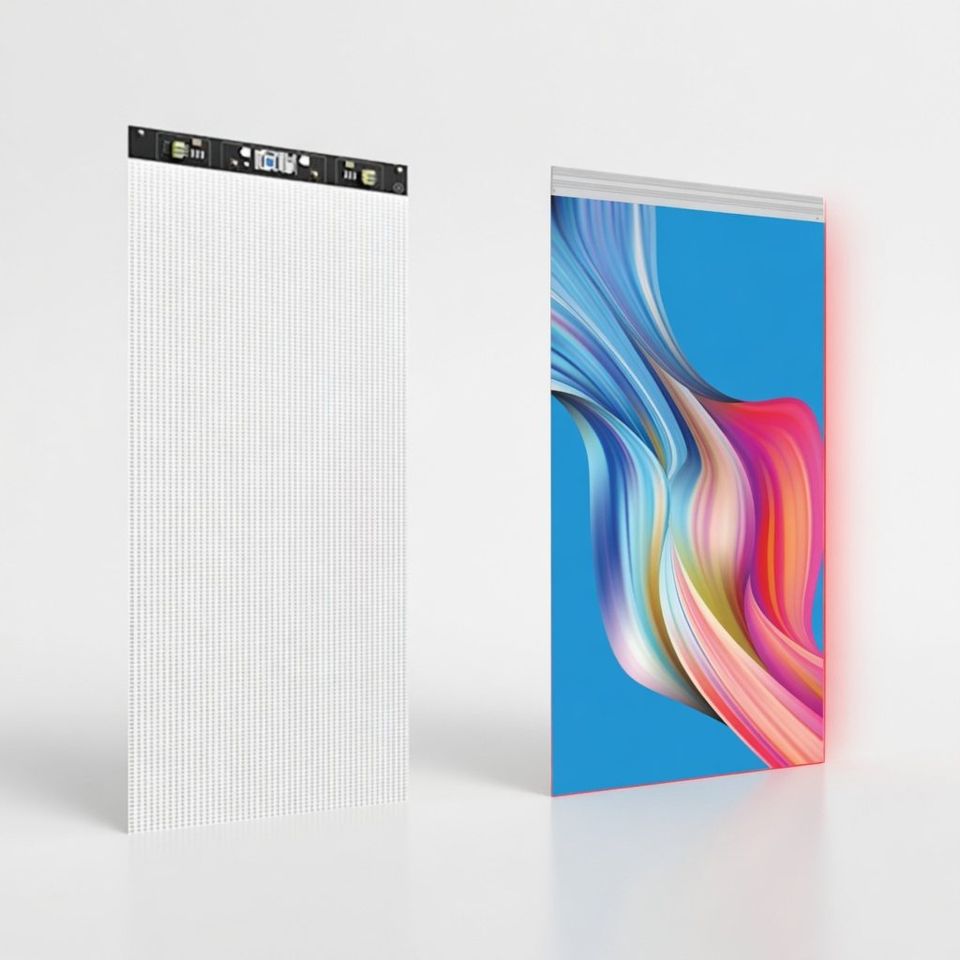
Transparent LED film for glass laminates fine LED strips inside an optically clear layer with adhesive on the back. It goes on like a vehicle wrap — squeegee, no drilling, no structure — and panels splice side by side into any width, with one controller driving up to 45 of them.
Engineering
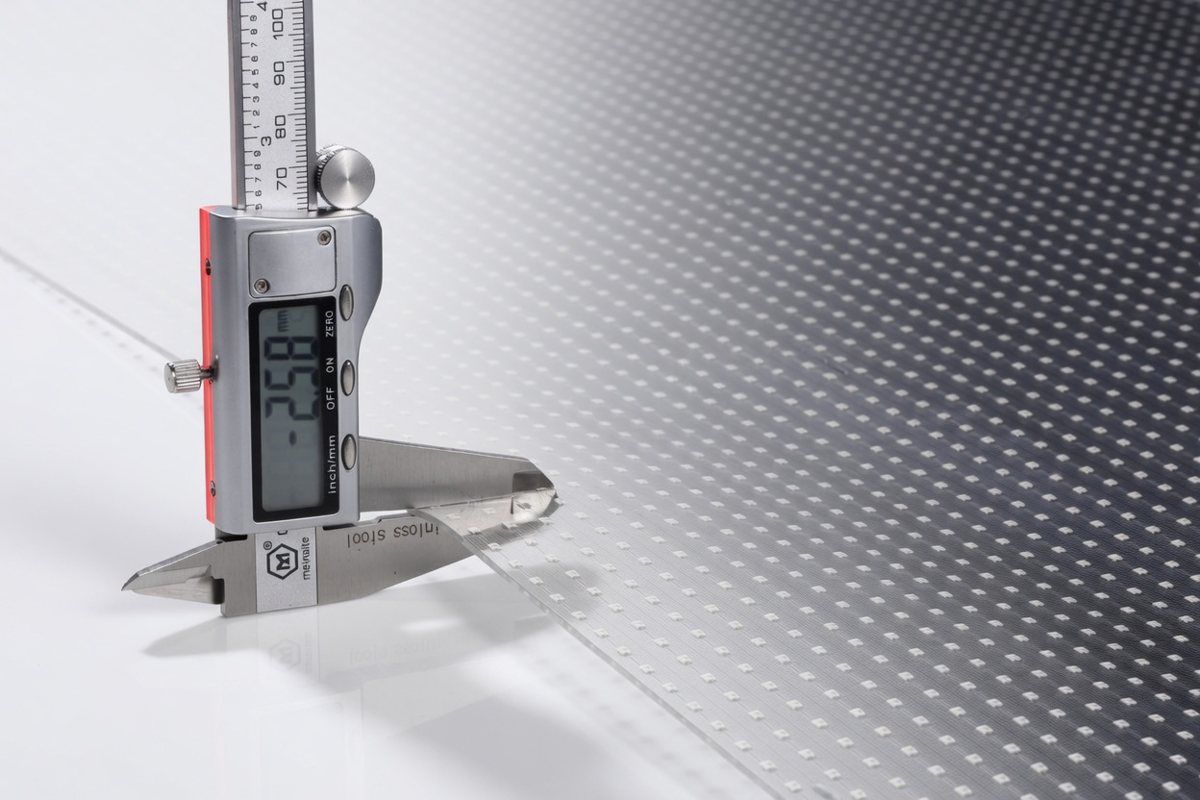
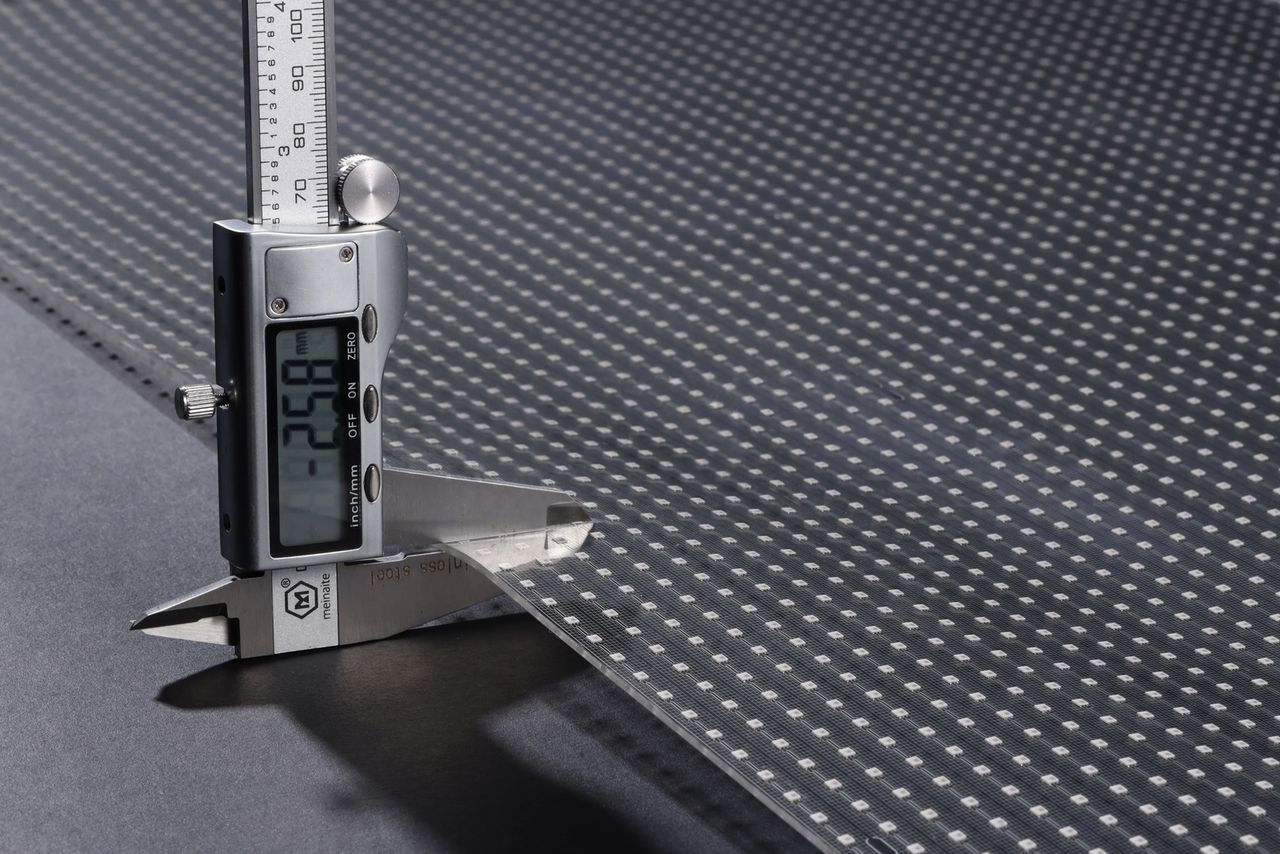
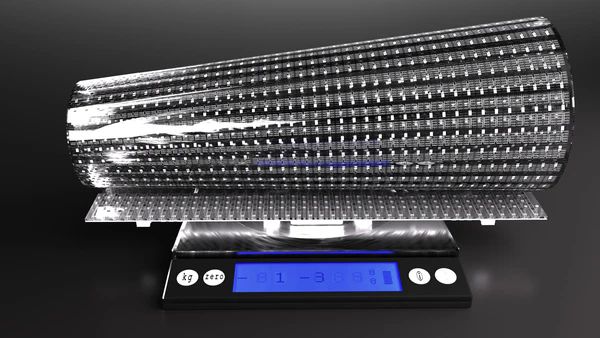
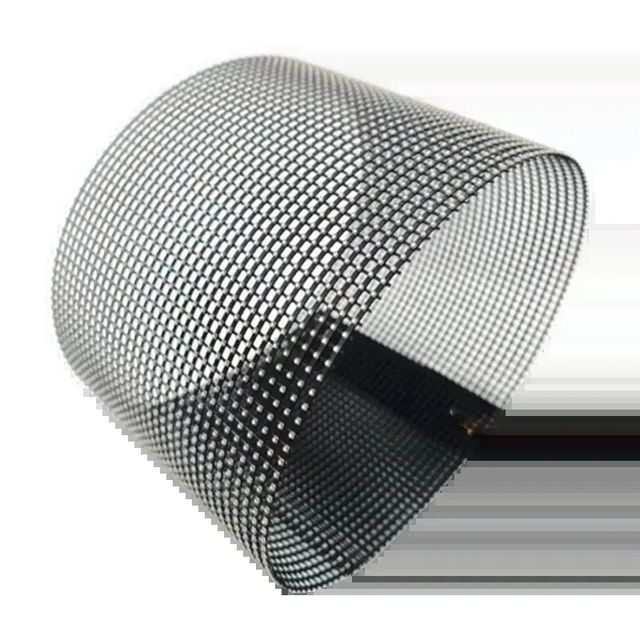
Total build is 0.5–3 mm at 1–3 kg/m². Pitches run P4 for close viewing to P20 at 95% transparency, with 1,500–4,000 nit options and 16-bit greyscale at 3,840 Hz — clean on every phone camera pointed at the window.
Proof
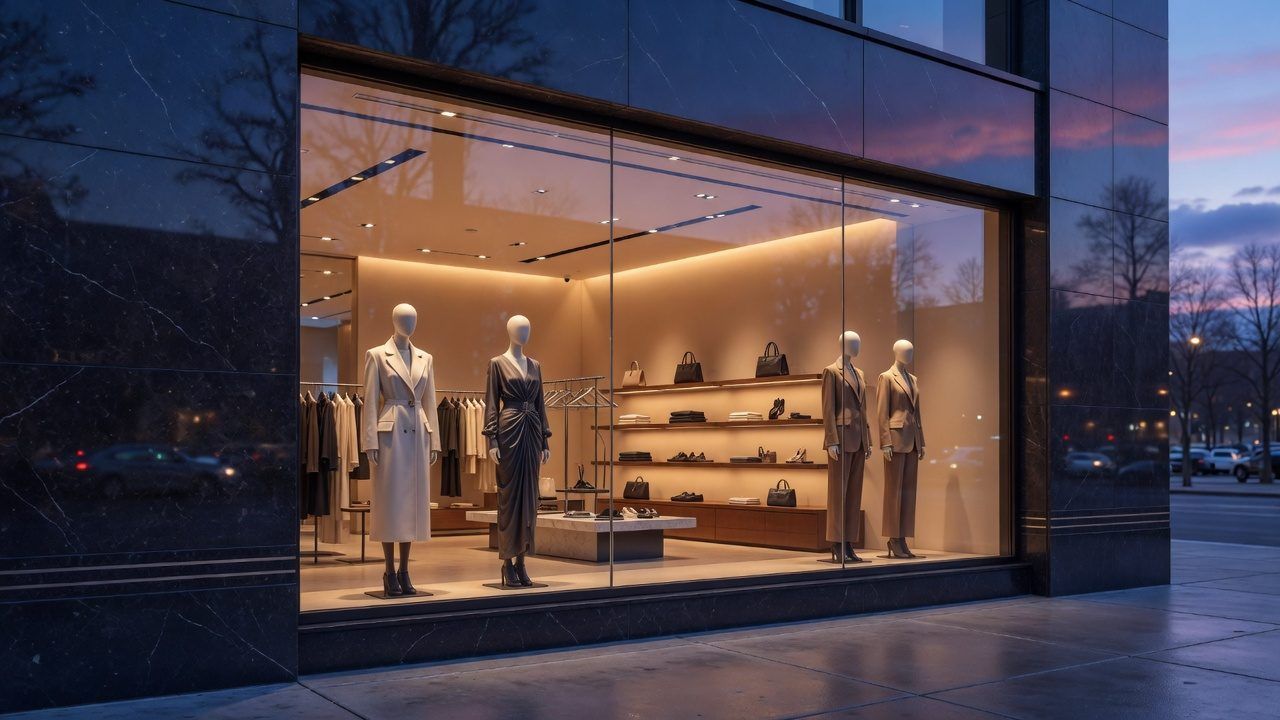
One boutique frontage, photographed with the film switched off and switched on. Drag the handle and watch the mannequins stay visible the whole way across — that is what a real see-through LED display looks like on the street at a 90%+ transparency grade.
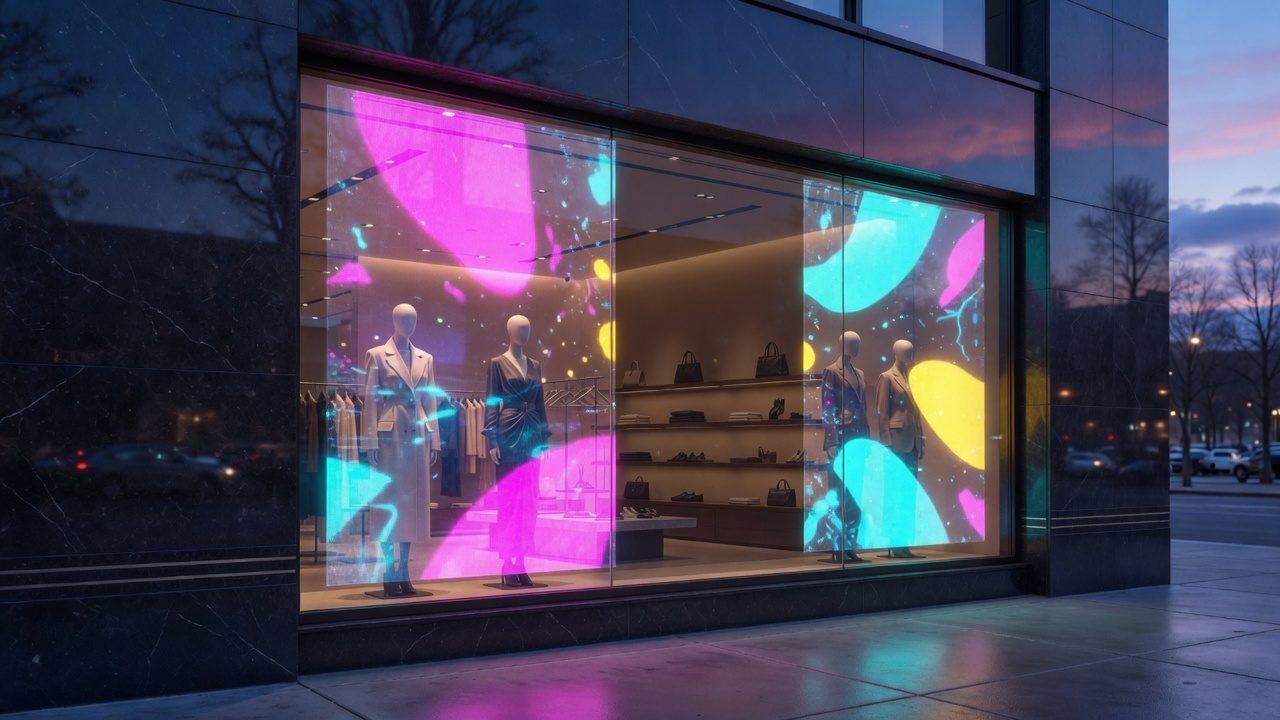
This is the test to run on any vendor: ask for the same window, same angle, off and on. Most cannot produce it.
Hold it in your hand
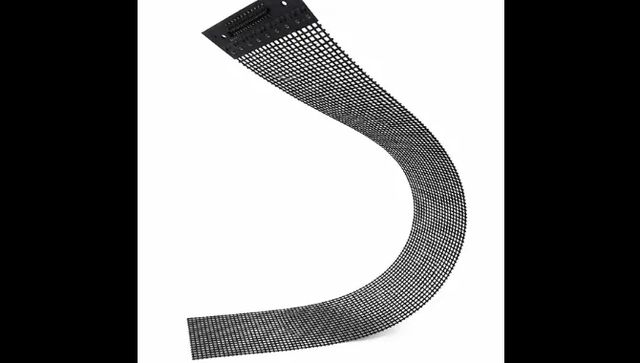
Every vendor claims their film is thin and light. These are measurements of the actual product, not renders.
Installed
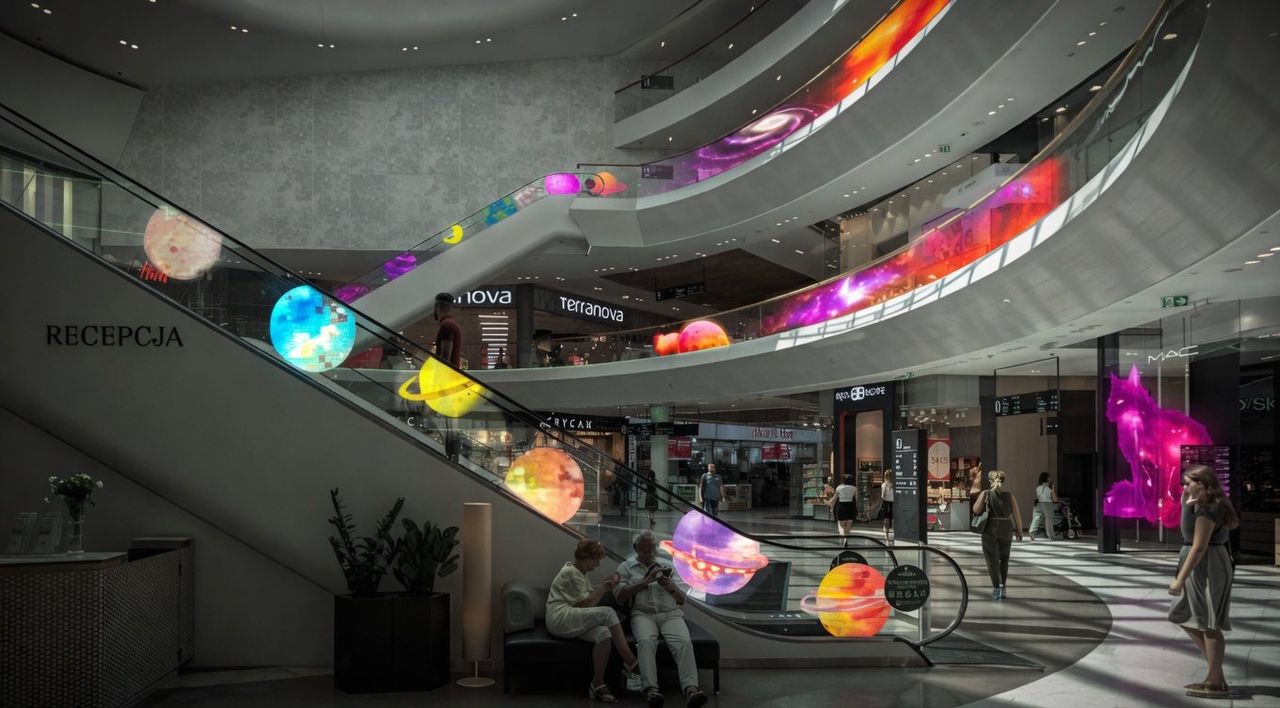
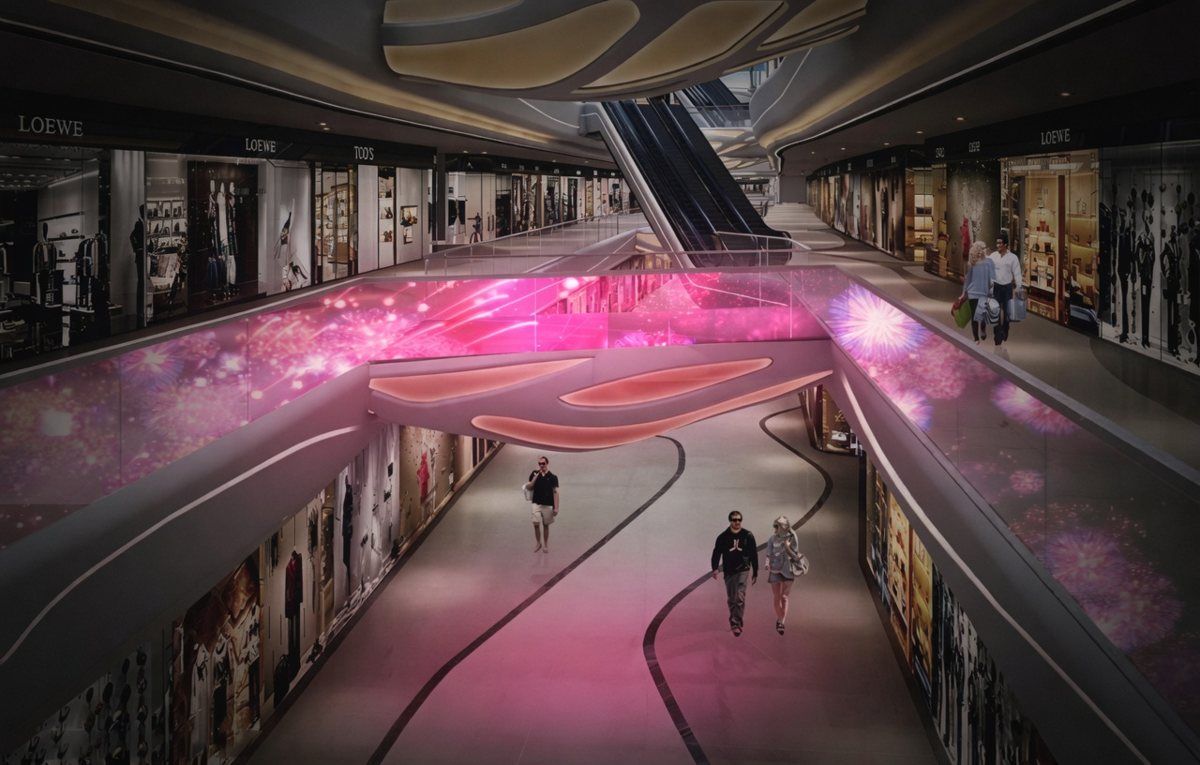
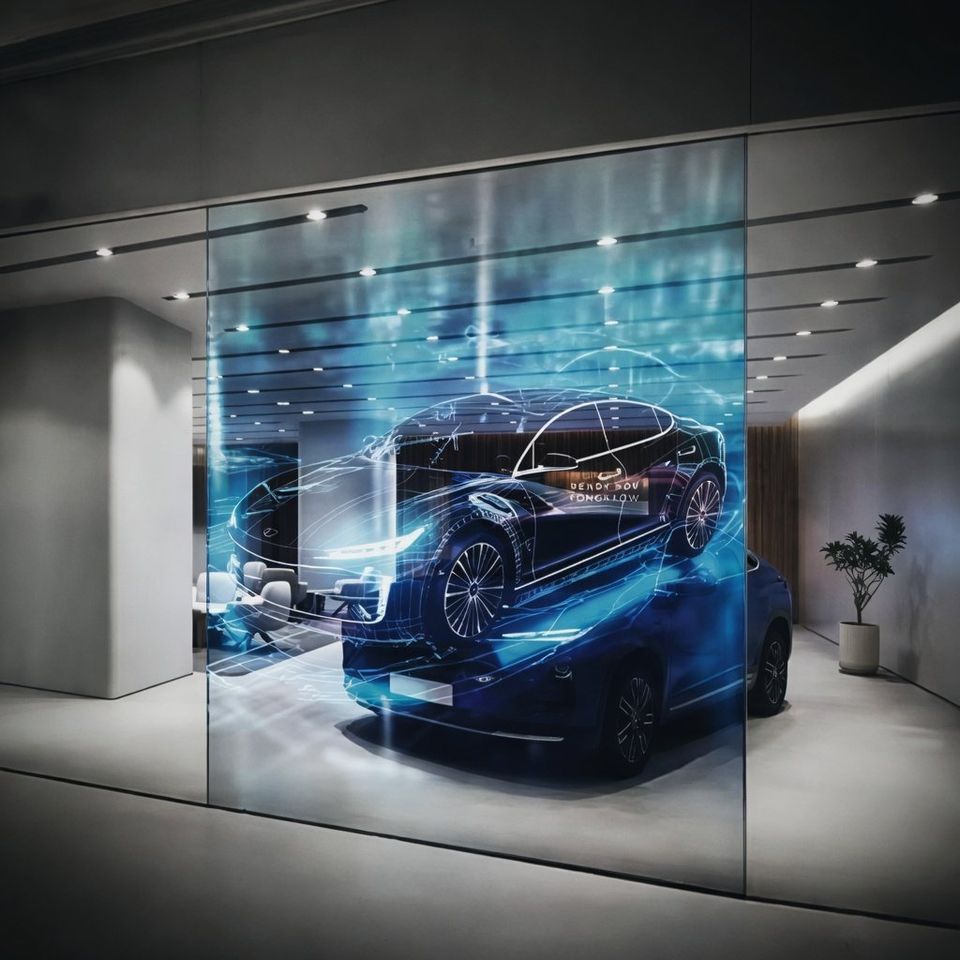
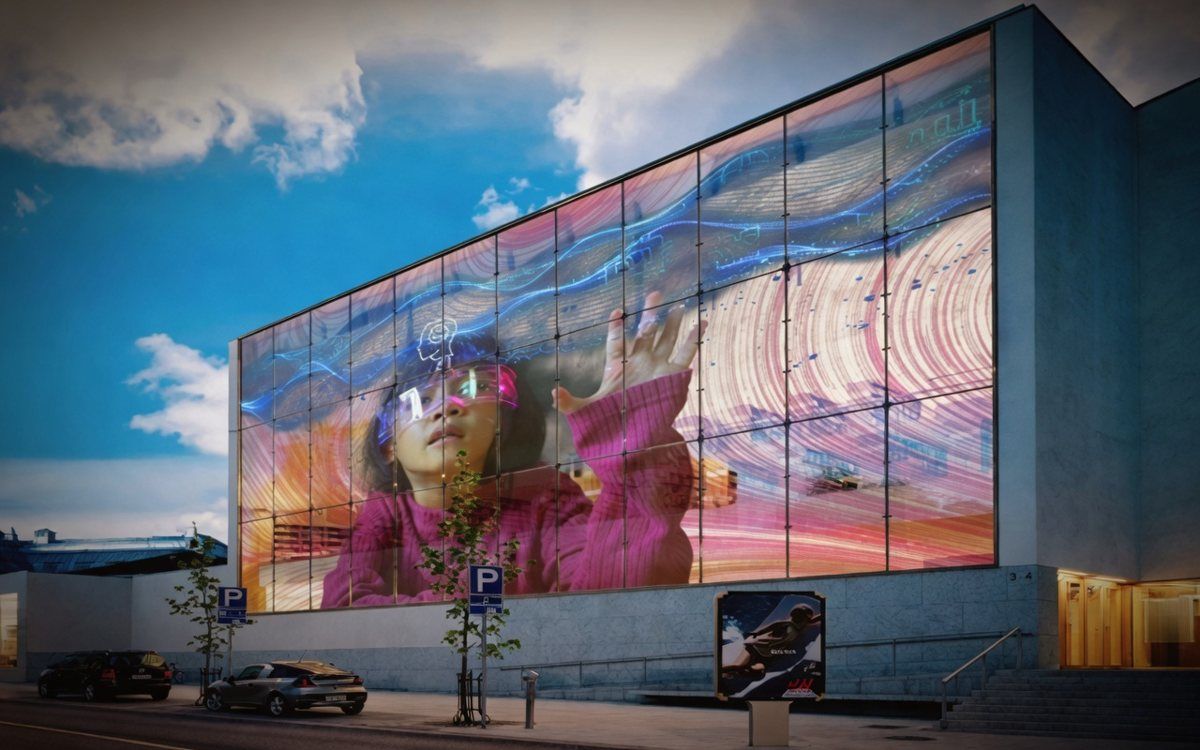
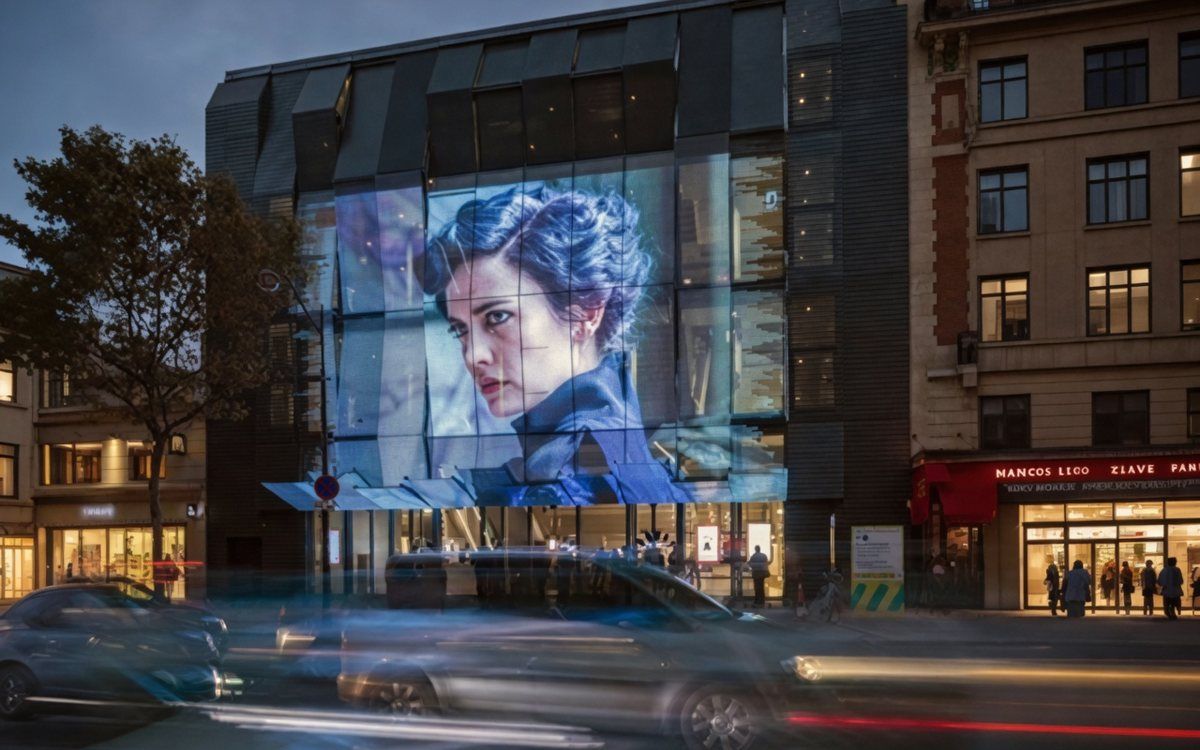
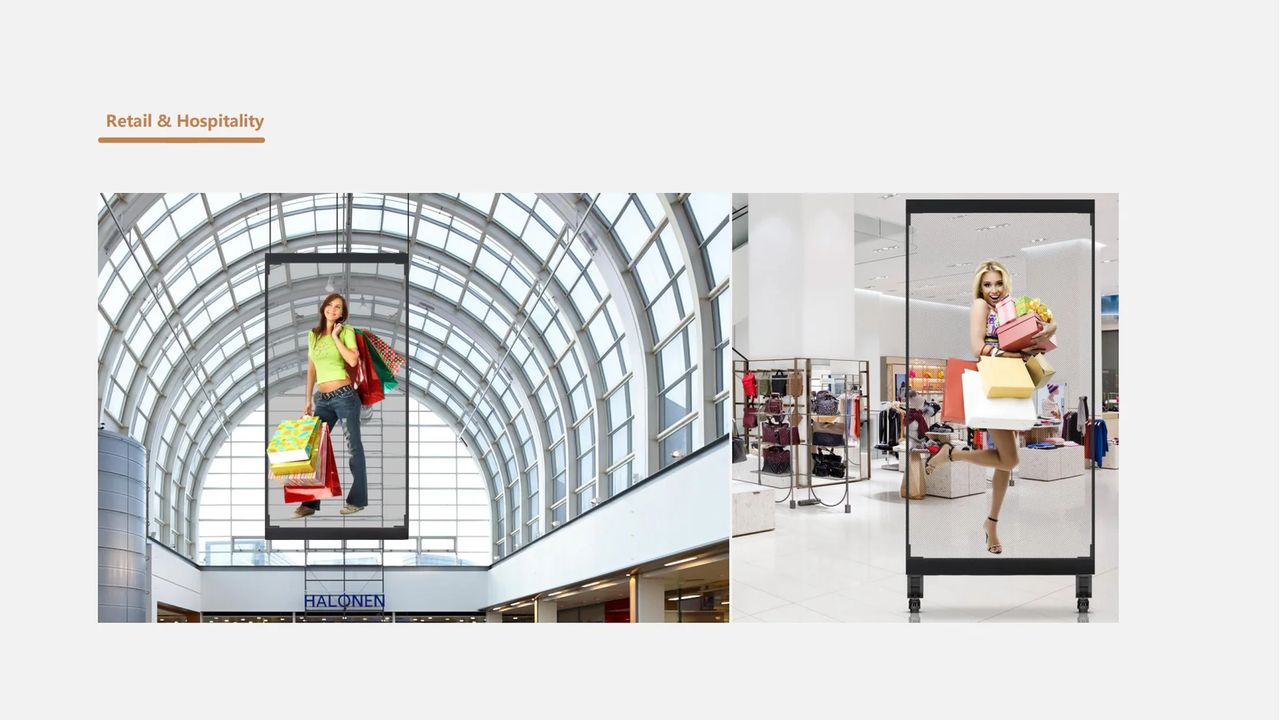
Adhesive and mesh film across storefronts, malls, showrooms and building facades — shaded and interior glazing in every case.
The range
Same technology, different commitment — start with one window and scale panel by panel.
Starter
240 × 600 mm or 400 × 1000 mm panel with controller and power supply in the box. The cheapest honest way to test transparent LED film on your own glass.
Storefront
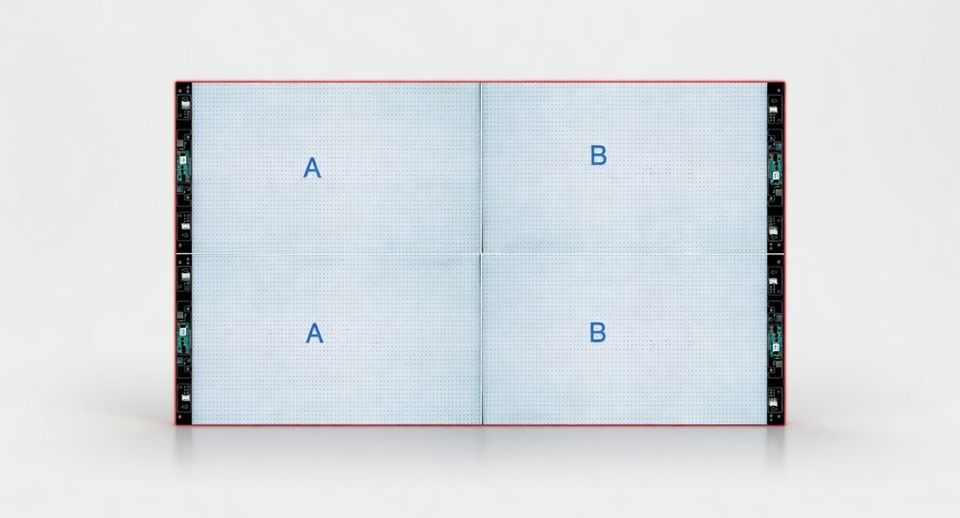
A+B panels interlocked across the full width of a shopfront, factory-cut to your measured glass and driven by a single controller.
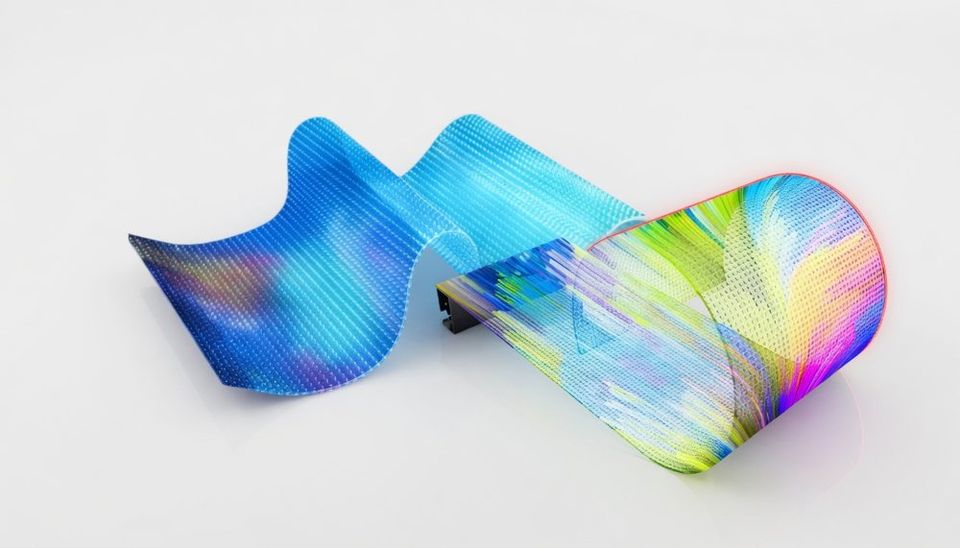
Curved
Bendable film for columns, cylinders, curved shopfronts and corner glazing that rigid cabinets simply cannot follow.
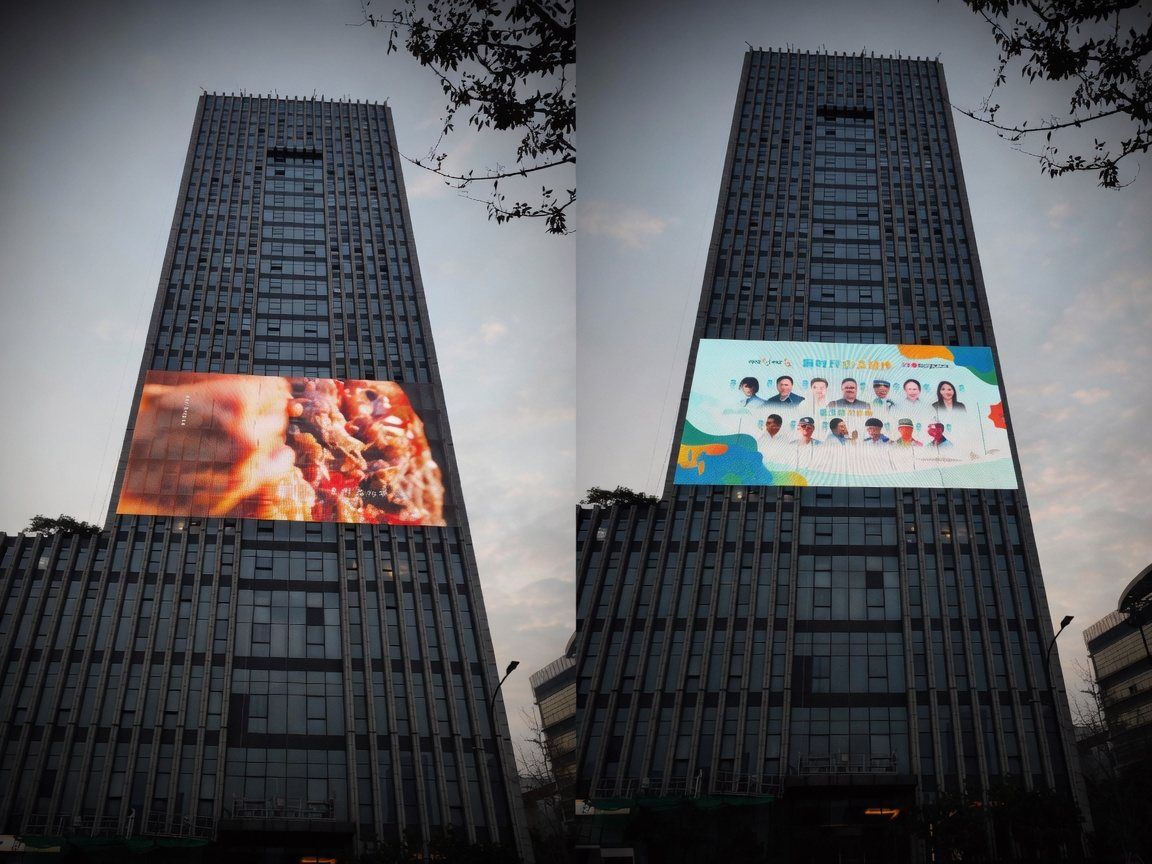
Large format
Wide-pitch film across multi-storey curtain walls for building-scale media — maximum transparency, minimum visual weight by day.
Specifications
P10 is the price and clarity sweet spot for 5–10 m viewing. Strips are factory-cut, so every project starts with a measured survey rather than a guess.
| Specification | Value |
|---|---|
| Transparency | 90–95% (P20 95% · P10 94% · P8 92% · P4 90%) |
| Thickness | 0.5–3 mm (typically 2–2.5 mm) |
| Weight | 1–3 kg/m² (~1.3 kg per 1000 × 400 mm panel) |
| Pixel pitch | P4 – P20 |
| Brightness | 1,500–4,000 nits |
| Refresh / greyscale | 3,840 Hz · 16-bit |
| Splicing | A+B panel system — one controller drives 38–45 panels |
| Strip length | Max ~1,450 mm standard, custom to 2,896 mm — factory-cut only |
| Power (average) | ~150 W/m² |
| Rated lifetime | ~100,000 h rated (L70, heat-managed) |
| Control | Novastar / Colorlight / Huidu — cloud, phone, USB |
| Warranty | 3-year manufacturer-backed cover (subject to terms), 5% spare strips stocked |
Budget guidance: kits from $389 for 240 × 600 mm; 400 × 1000 mm panels $590–1,390, working out to roughly $1,475–3,150/m² at retail. Stock sizes ship in 1–3 days, custom-cut projects run 20–25 business days from measurement.
Why it wins
Roughly five minutes per square metre with a squeegee: fitted before opening, live by lunch, with no shopfitting and no store closure.
No drilling, no load, fully removable — the only LED screen a landlord will sign off without a structural report.
$389 puts a working screen on one window. Prove the concept on your worst-performing store before you commit the whole estate.
Wraps columns, corners and cylindrical glass that rigid cabinets cannot follow, with no custom framing bill.
We survey the glass and order factory-cut strips to those dimensions — no site trimming, no improvised edges.
Strips swap individually with 5% spares held per project. A fault never takes the whole window dark for a shipping cycle.
Where it works
Built for any interior or shaded commercial glazing kept out of direct sun — which is most glass frontage.
FAQ
No. The optically clear adhesive is designed to be removable and the glass comes off clean. Re-using a removed panel is not guaranteed, so we plan panel sizes carefully up front rather than expecting to reposition later.
No — film is factory-cut only, because the driver strips and ribbon routing are laid out for a specific panel size. We measure your glass on the survey and order exact dimensions, which is included free with every quote.
We would not sell it to you for that. Direct sun degrades adhesive film — heat attacks the bond and the electronics, and screens throttle brightness when they get hot. For sun-exposed glass we quote behind-glass film on standoffs or framed mesh instead. Same floating effect, engineered for the heat, and it is the reason our film installs still look right at year five.
Strips are replaced individually, not as a screen. We stock 5% spares with every project so a swap takes minutes rather than a freight cycle. Panels are rated to 100,000 hours and carry three years of cover.
Stock kit sizes ship in 1–3 days and install in hours. Custom-cut projects typically run 20–25 business days from confirmed measurements to switch-on, and we book the install slot at order rather than after delivery.
Yes — that is the strongest use case. Every screen sits on one cloud CMS, so a campaign pushes to every window at once with scheduling by daypart and local override for store-specific promotions.
Yes, and it is the preferred surface. Film bonds to the inner pane so the outer pane takes the weather and the cavity helps thermally. We check pane thickness and any low-E coating on survey, because coatings affect both adhesion and perceived brightness.
Start with a plug-and-play kit. Scale to the whole estate when the footfall numbers prove it.
Get a quote
Within one business day: recommended pitch, panel layout for your exact glass, load and power figures, and a fixed budget range — plus a straight answer if your window needs a different product.
No formal RFQ required to start the conversation. Send a photo of the glass or a rough size — that is enough for a first spec.