
Malls, atriums & balustrades
The most valuable glass in the building is the balustrade.
Every shopper in the atrium looks across the void, not at the shopfronts. Transparent film turns that curved balustrade glass into premium advertising inventory without adding a single beam.
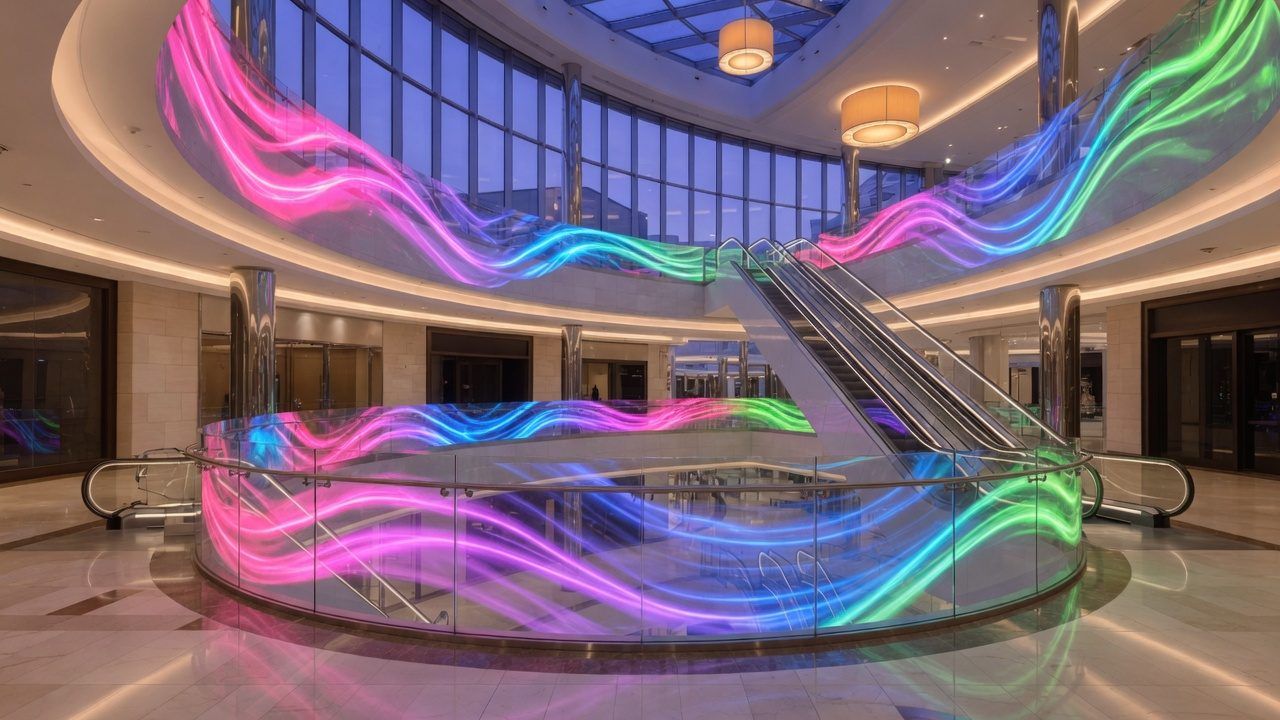
Curved balustrades are the surface almost nobody is selling yet — and film is the only product that follows the curve.
The brief
What an atrium install actually involves
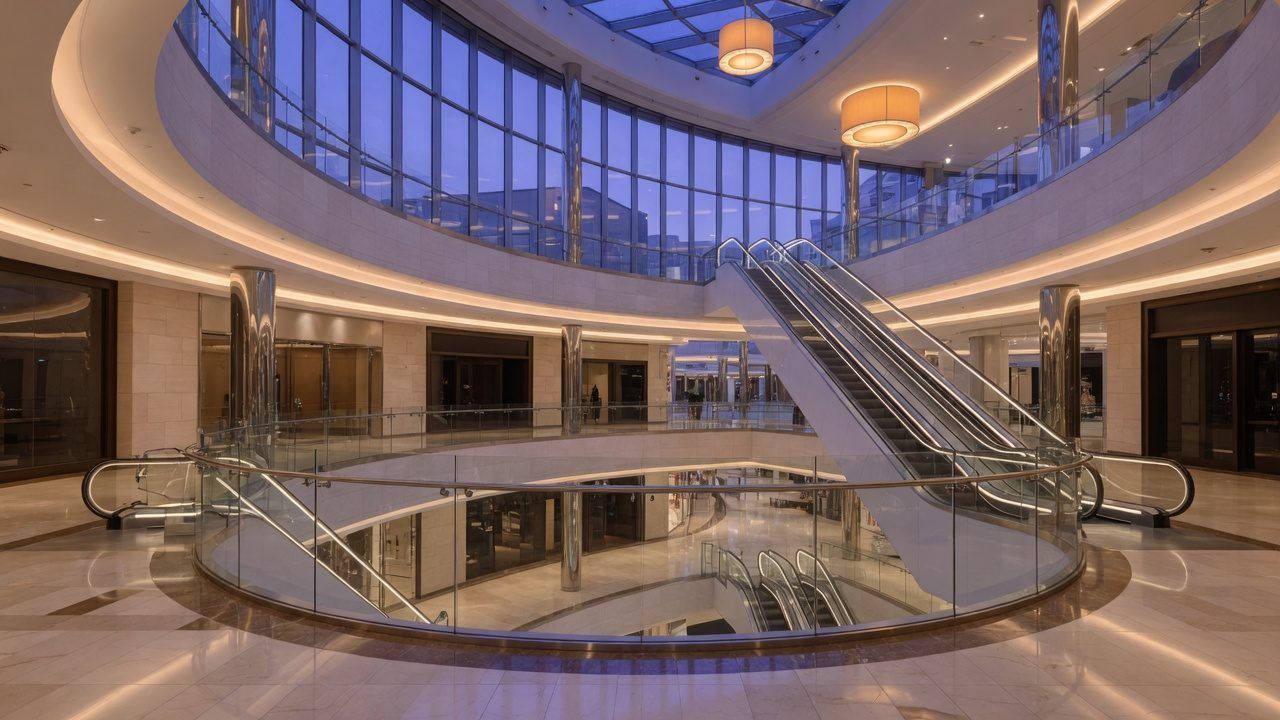
Balustrade glass is usually toughened, laminated and structurally guarded, so nothing can be drilled and nothing heavy can be hung. Adhesive film at 1–3 kg/m² sits well inside the tolerance and follows curves down to a 300 mm radius, which rigid cabinets cannot do.
We work overnight in an operating centre: short access windows, hoarding, and cabling routed through existing balustrade channels. We sequence around the centre management access schedule rather than a factory lead time.
- Typical productP10 adhesive film, 94% transparency
- Typical sizeRuns of 8–40 m along the void edge
- Load on glass1–3 kg/m² — negligible on structural balustrade
- AccessOvernight, zero trading disruption
- Revenue modelAdvertising inventory or centre promotion
Before you buy
Four things to check before wrapping a balustrade
Public, guarded, curved glass: the constraints are real, but every one is manageable.
Is the glass structural?
Balustrades are safety-critical. Adhesive film adds no load and no fixings, but the centre's structural engineer should still see the figures. We supply them.
What is the curve radius?
Film bends to roughly a 300 mm radius. Tighter than that and we segment the panels — which changes the layout, so it belongs in the survey.
Where does the power come from?
Balustrade runs need discreet cable routing and a local supply. Existing lighting circuits in the handrail channel are often the cleanest route.
Who owns the advertising rights?
In managed centres the media rights may sit with a third party. Confirm this before the install, not after.
Typical uses
Where atrium screens work
- Shopping centre balustrades
- Atrium voids
- Escalator flanks
- Glass lift shafts
- Airport concourses
- Hotel atria
- Casino walkways
- Exhibition centre concourses
- Office building atria
- Transport interchanges
Recommended product: Self-adhesive LED film — applies to curved balustrade glass without structure and is light enough for guarded edges and listed atria
FAQ
Questions from this kind of project
Is it safe on a balustrade?
Film adds 1–3 kg/m² and no fixings, so it does not alter the structural performance of the glass. We supply the load figures for your structural engineer to sign off, and installation follows the centre's own permit-to-work process.
Can it follow the curve?
Yes, down to roughly a 300 mm bend radius — this is the main reason film wins over cabinets in atria. Tighter curves are handled by segmenting panels, which we plan during the survey so the joins land where the eye does not follow.
Can it be removed later?
Yes. The adhesive is removable and the film peels away clean, which matters when the centre is refitted or the media contract changes hands.
How is it viewed from both sides?
Transparent film emits primarily to one face, so content reads correctly from the intended side and appears mirrored from the reverse. In an atrium we normally target the opposite-side viewer since that is where the audience stands, and we confirm the orientation in the layout drawing.
Other environments
Get a quote
Spec my atrium glass
Send the run length, curve radius and a photo. We reply with panel layout, load figures, access plan and a budget range.
No formal RFQ required to start the conversation. Send a photo of the glass or a rough size — that is enough for a first spec.
- Emailbusiness@smartechllc.tech
- Phone+1 (860) 899-8069
- Address19920 Hwy 99 Ste A, Lynnwood, WA 98036
- HoursMon–Fri, 9am–5pm PT · Reply within one business day