
Restaurants & hospitality
Different offer at 10am and 8pm. Same window.
Printed promotions are a bet on one message. Transparent film on the upper glass runs brunch, lunch and late-night cocktails in sequence — and disappears when it is off so the room still looks like a restaurant.
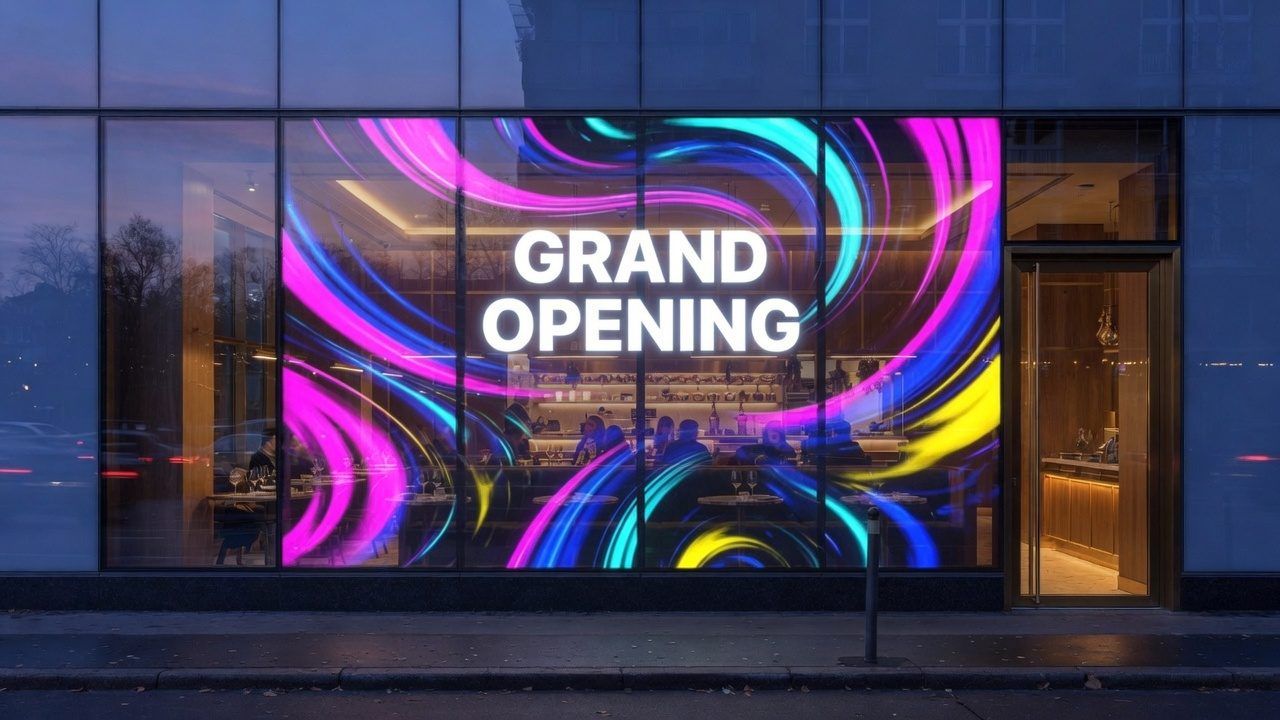
Content sits on the upper glass, above eye level for seated diners — the view out stays uninterrupted.
The brief
What a hospitality install actually involves
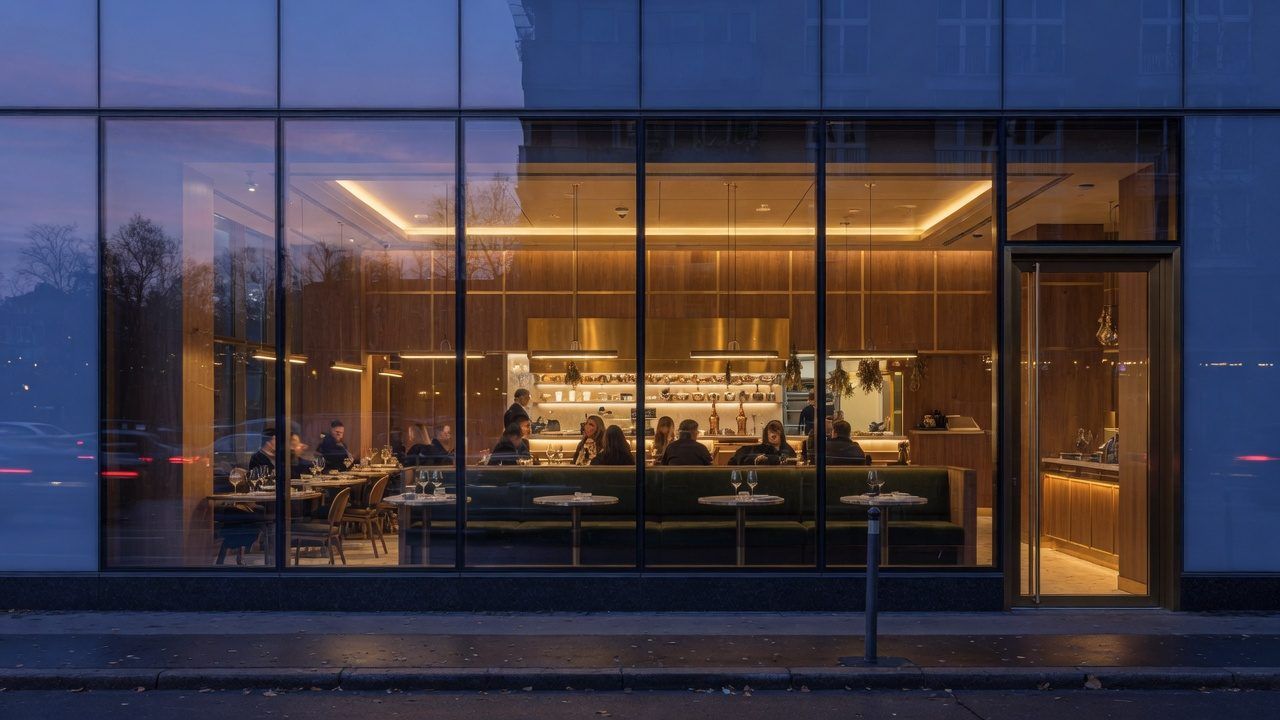
We fit the transparent LED film across the upper band of the frontage — typically the top 600–900 mm — so it reads to people on the pavement without sitting in the eyeline of anyone at a window table. Install happens between service, usually in a single morning.
Hospitality glass is nearly always shaded by an awning or a canopy, which makes it ideal for adhesive film. The only common blocker is a fully south-facing unglazed frontage, where we move to a behind-glass product instead.
- Typical productP10 adhesive film, 94% transparency
- Typical size2–5 m wide × 0.6–0.9 m high band
- ContentDayparted — brunch, lunch, evening, late
- InstallOne morning, between services
- Hardware budget$2,200–6,500 for a typical frontage
Before you buy
Four things to check before putting a screen on a restaurant
Small budgets, tight sites — these are where projects go wrong.
Where do diners sit?
Content in a seated eyeline annoys customers. We band the screen above head height so the guest experience is untouched.
Is there an awning?
A canopy shading the glass makes adhesive film the right product. Fully exposed south-facing glass does not — and we will tell you before quoting.
Who updates the content?
Restaurant marketing is often one manager with a phone. The CMS has to be simple enough for that, and we train on it at handover.
Local signage rules?
Animated content facing a street is regulated in many towns and conservation areas. We check during quoting.
Typical uses
Where hospitality screens work
- Restaurant frontages
- Café windows
- Bars & cocktail lounges
- Hotel receptions
- Quick-service chains
- Bakeries & delis
- Nightclub entrances
- Casino bars
- Food halls
Recommended product: Self-adhesive LED film — sits on the upper glass out of diners' sightlines, changes by daypart from a phone and costs less than a year of printed A-boards
FAQ
Questions from this kind of project
Will it bother diners sitting by the window?
Not when it is banded properly. We run the film across the upper glass, above seated eye level, so the content reads to the street while the view from a window table stays clear. Brightness also drops automatically after dark.
How much does a typical restaurant frontage cost?
A 3–4 m band across the upper glass runs roughly $2,200–6,500 in hardware plus install — comparable to a year or two of printed promotional material, after which the content is effectively free to change.
Can staff change the content themselves?
Yes. The CMS runs from a phone or browser, with scheduled playlists so brunch, lunch and evening promotions switch automatically. Most sites set it once and only update it for specials.
Is it bright enough to see at night without dazzling diners?
Auto-brightness handles this. The screen runs high output in daylight and drops substantially after dark, which is both more comfortable for guests and considerably cheaper to run.
Other environments
Get a quote
Spec my frontage
Send the frontage width and a photo from the pavement. You get a banding layout, content schedule suggestion and a fixed budget range.
No formal RFQ required to start the conversation. Send a photo of the glass or a rough size — that is enough for a first spec.
- Emailbusiness@smartechllc.tech
- Phone+1 (860) 899-8069
- Address19920 Hwy 99 Ste A, Lynnwood, WA 98036
- HoursMon–Fri, 9am–5pm PT · Reply within one business day