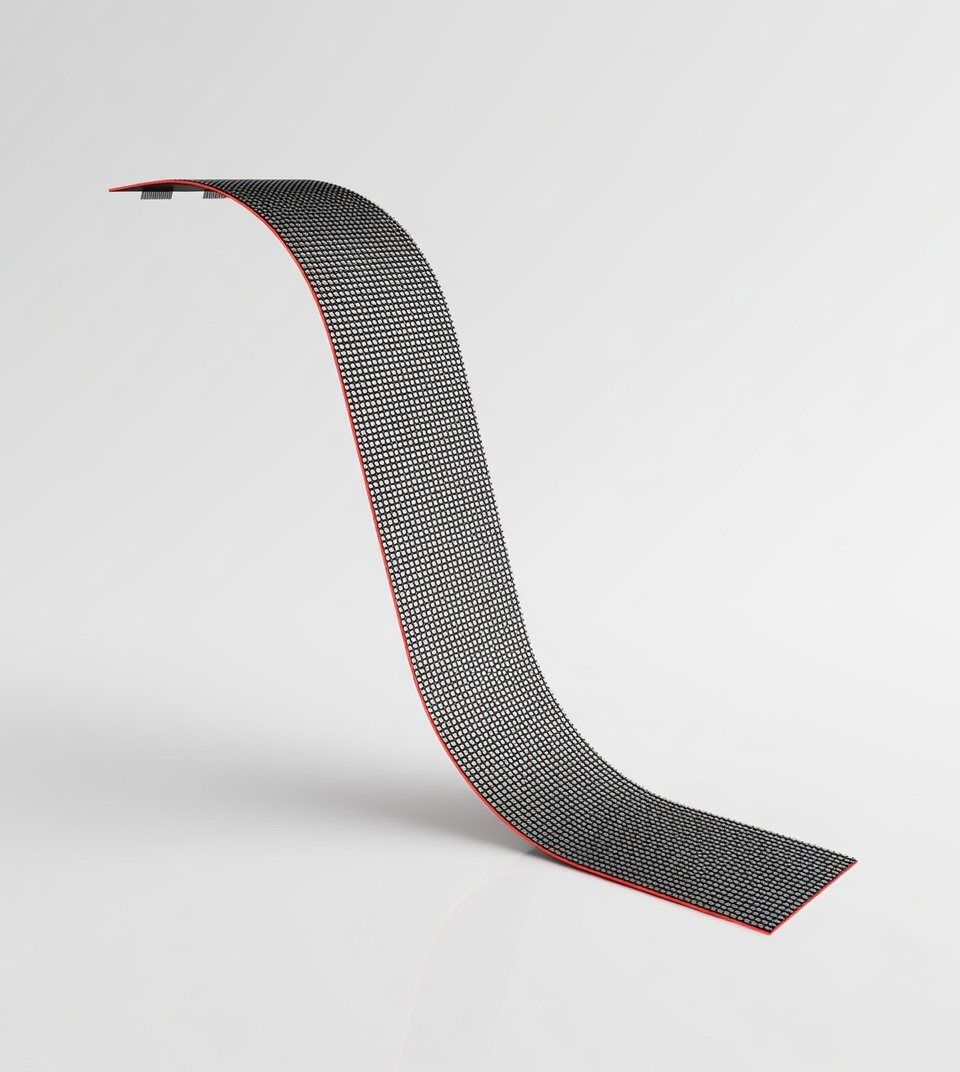
Flexible film
Transparent LED film
Under 2 mm thick at about 6 kg/m² and 80–95% transparent. Hangs behind glass with no steel structure, bends around curves and splices seamlessly to 3 m.

See-through LED display behind your glass: invisible when off, unmissable when on. Customers see your products and your campaign at the same time, and the architecture never changes.

What it is
Transparent LED puts the pixels on narrow strips with clear space between them. Far enough away the eye fills the gaps and reads a solid bright image; up close, and from inside, the glass is still glass. Nothing is projected and nothing is printed — it is a real emissive display that happens to be mostly air.
The effect
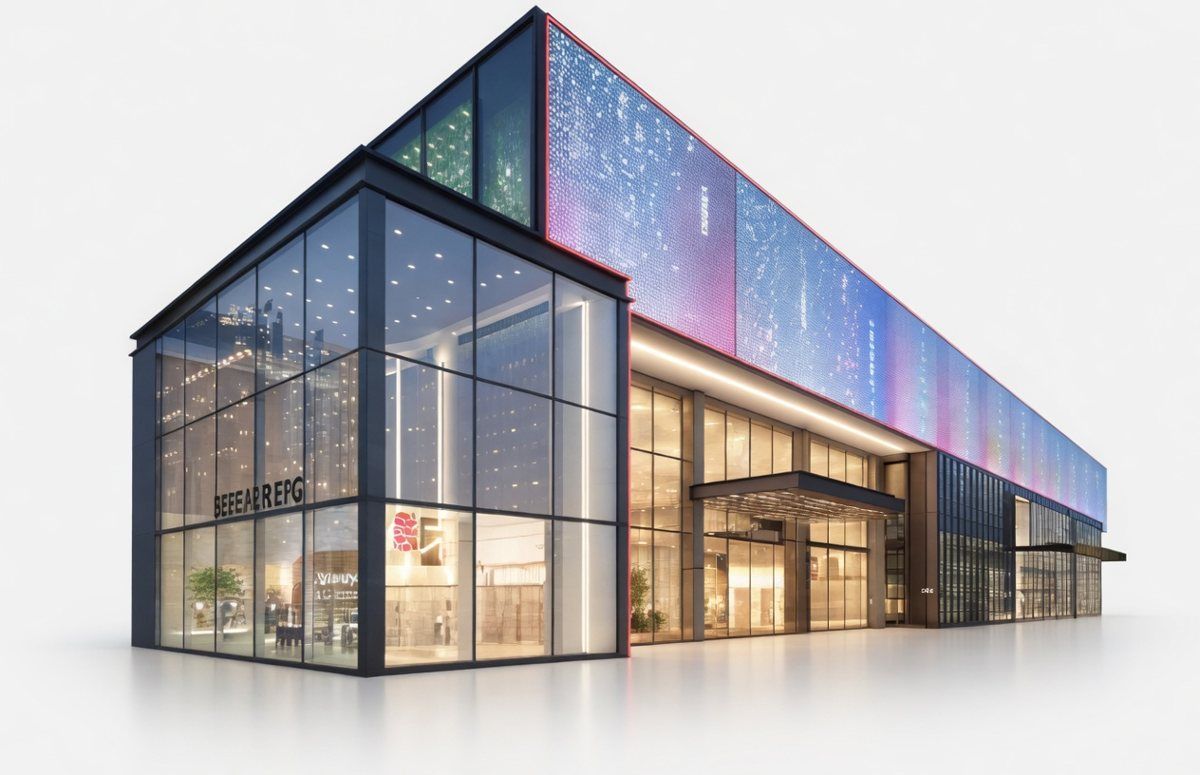
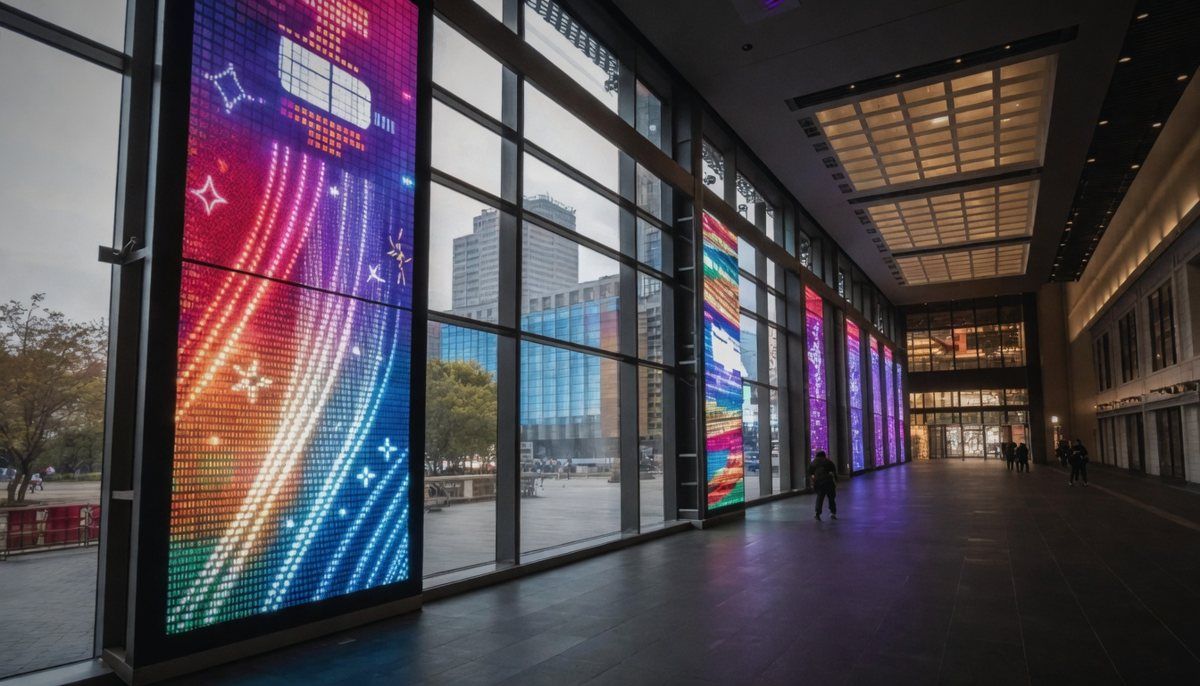
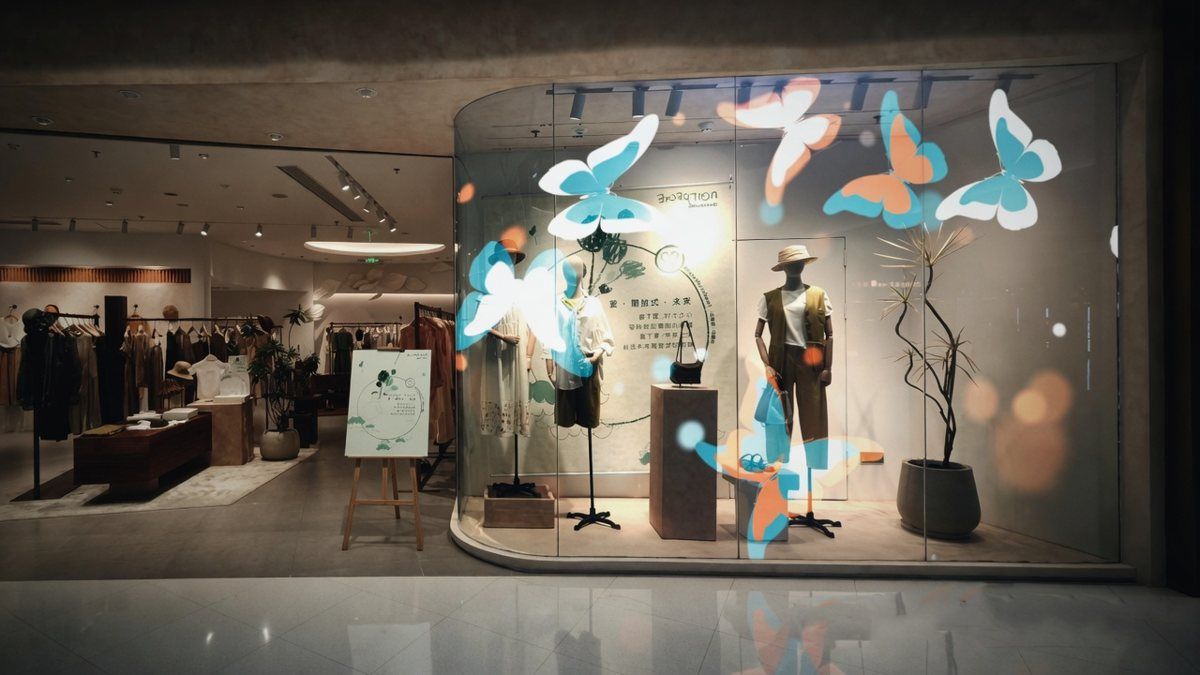
A static vinyl covers your window. A transparent LED display keeps the window and adds motion on top of it — and motion tends to draw more attention than a static graphic in a window. The content appears to hover in front of your merchandising rather than hiding it.
Proof
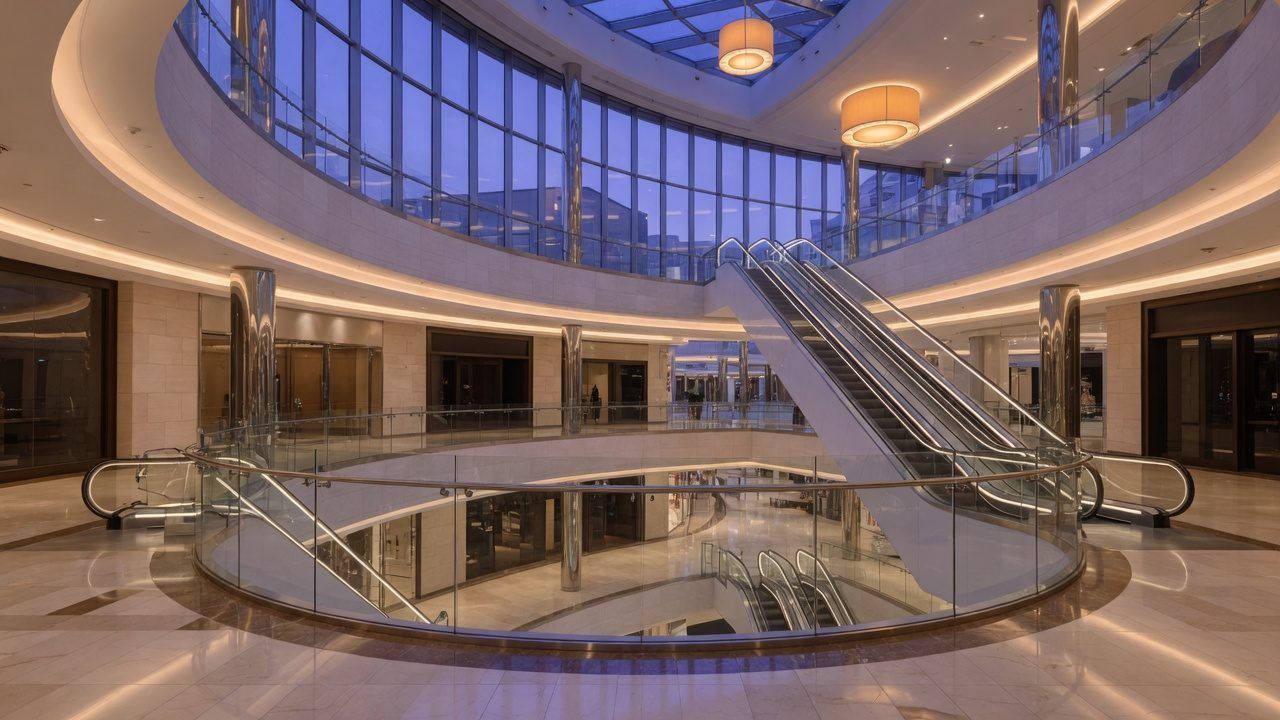
Curved glass balustrades running transparent film. Drag the handle — the escalators, shopfronts and shoppers stay visible through the graphics the whole way across.
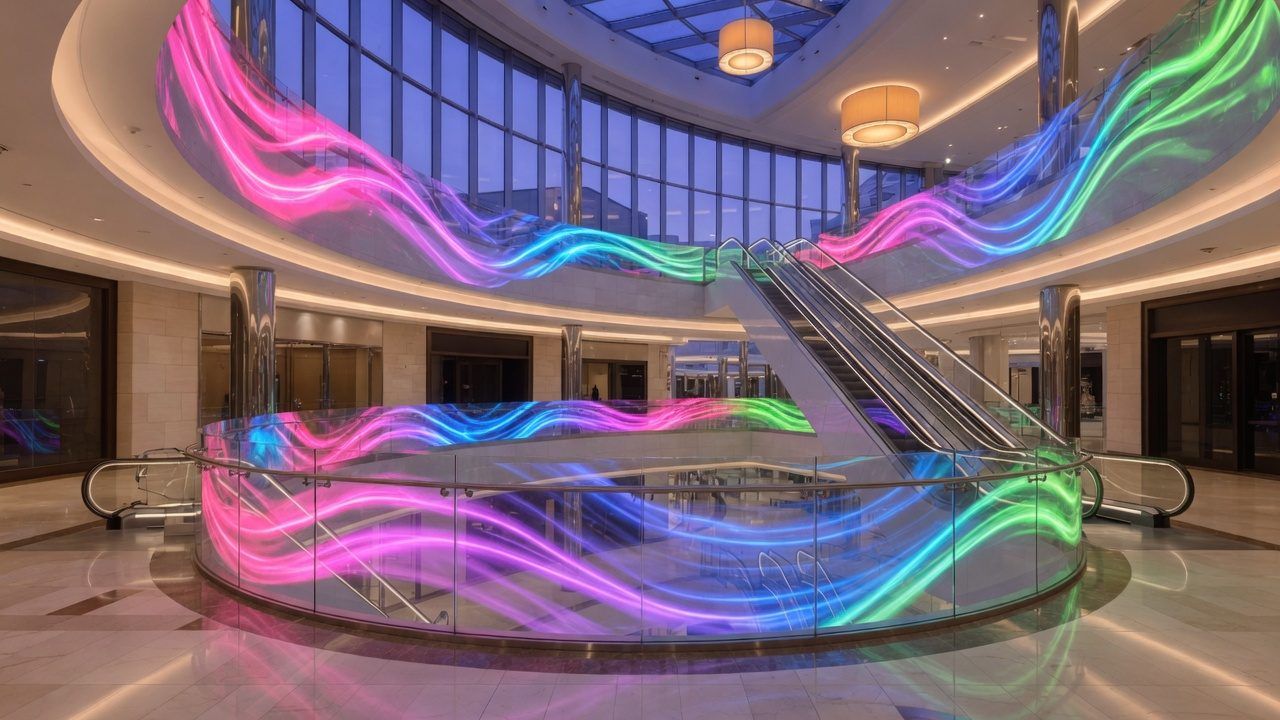
Balustrades, curtain walls and atrium glass are the highest-impact surfaces in any retail building — and the ones nobody is using yet.
Hold it in your hand
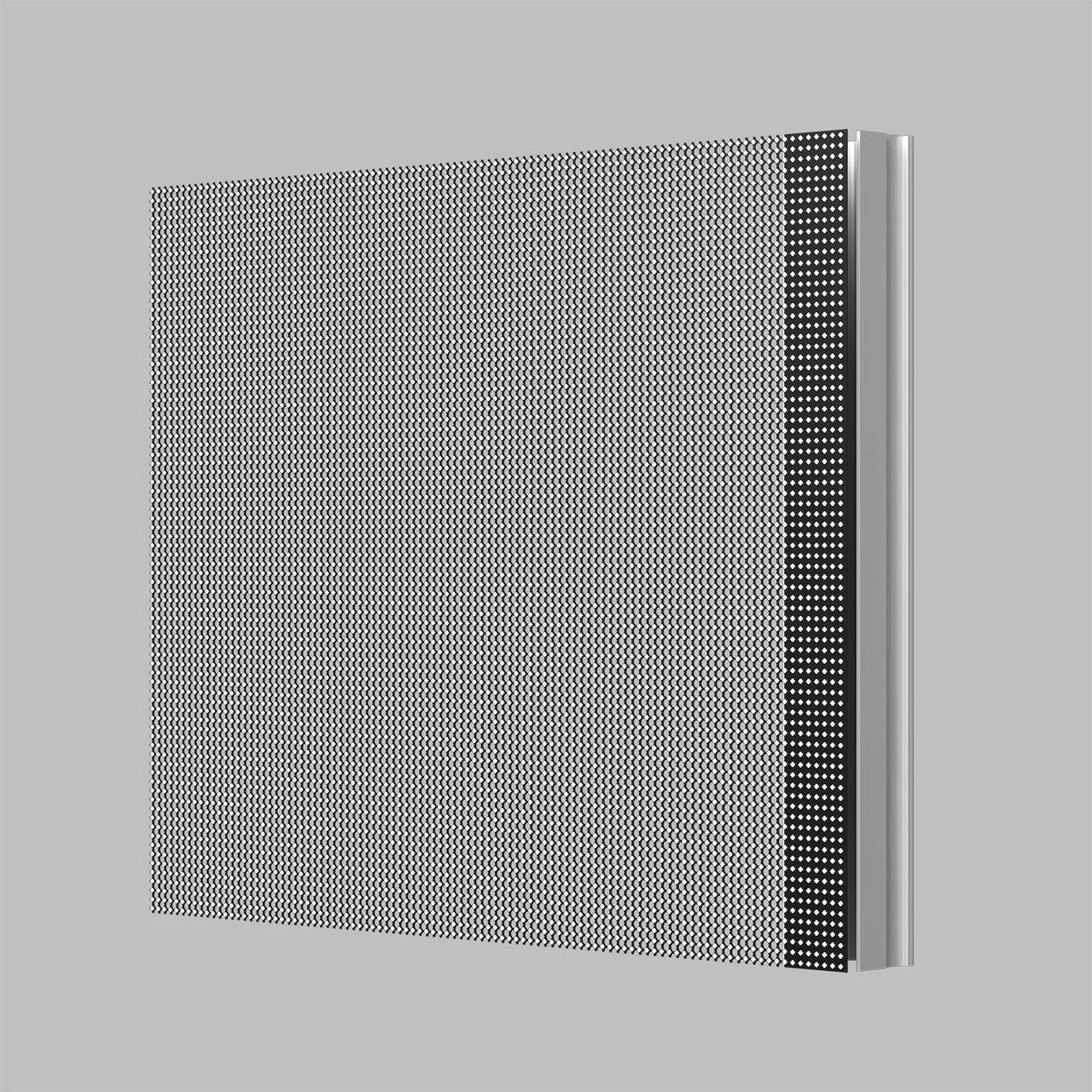
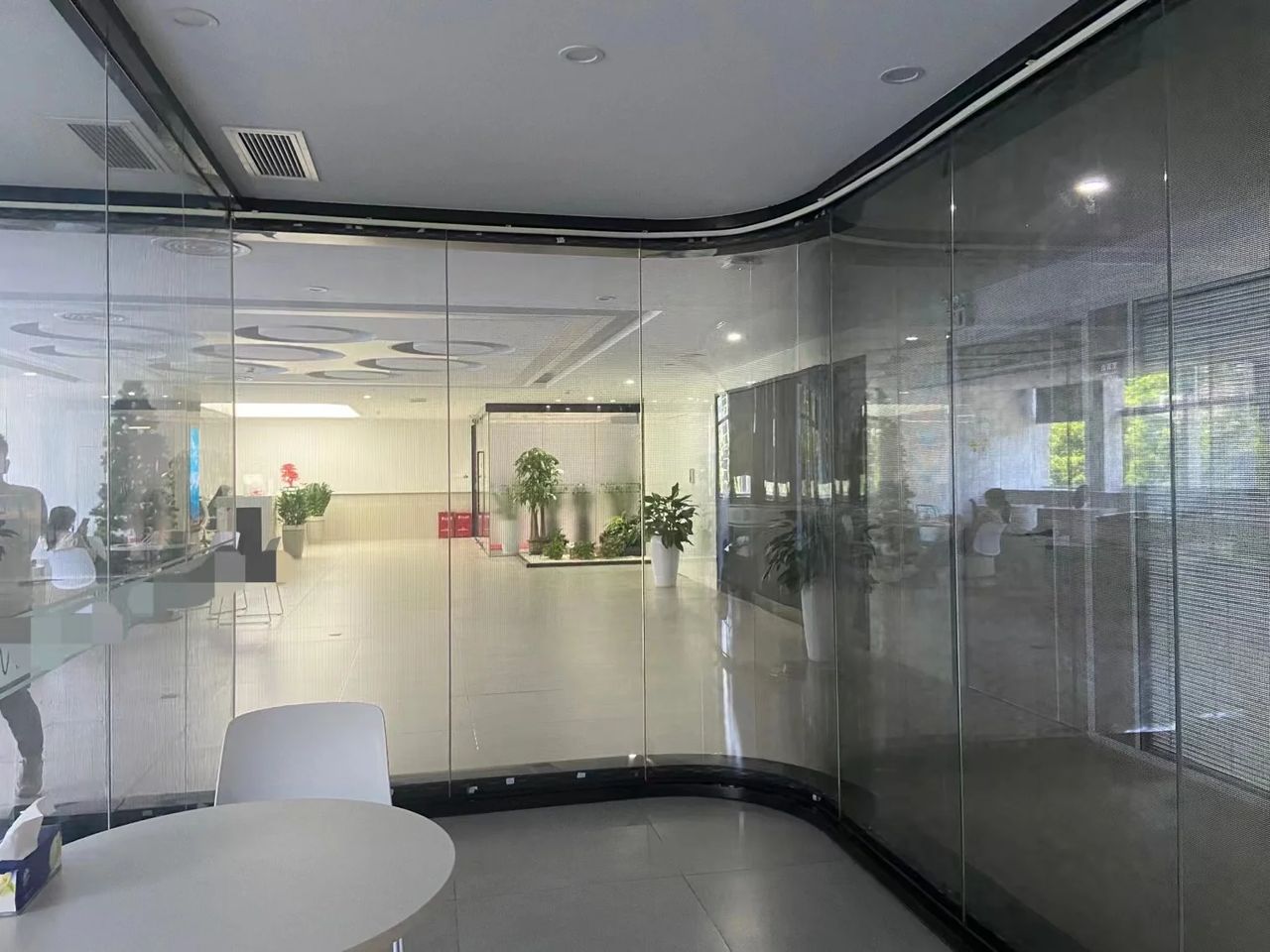
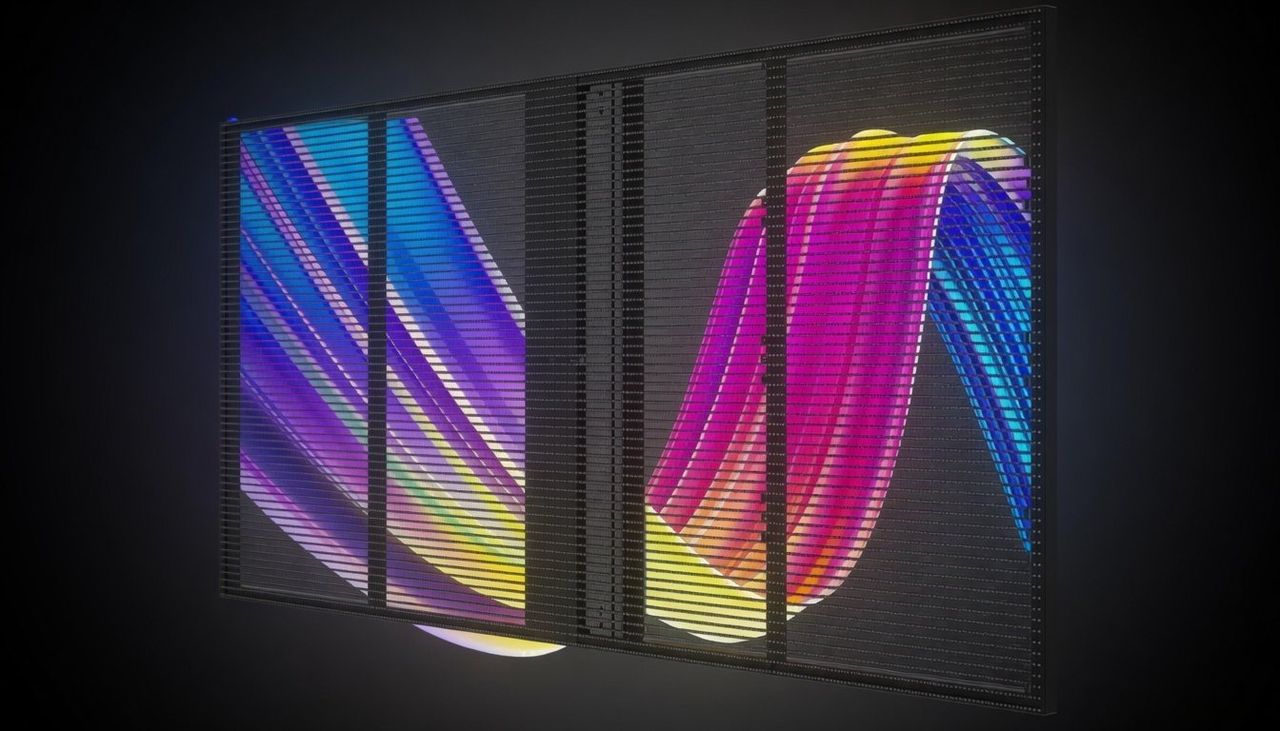
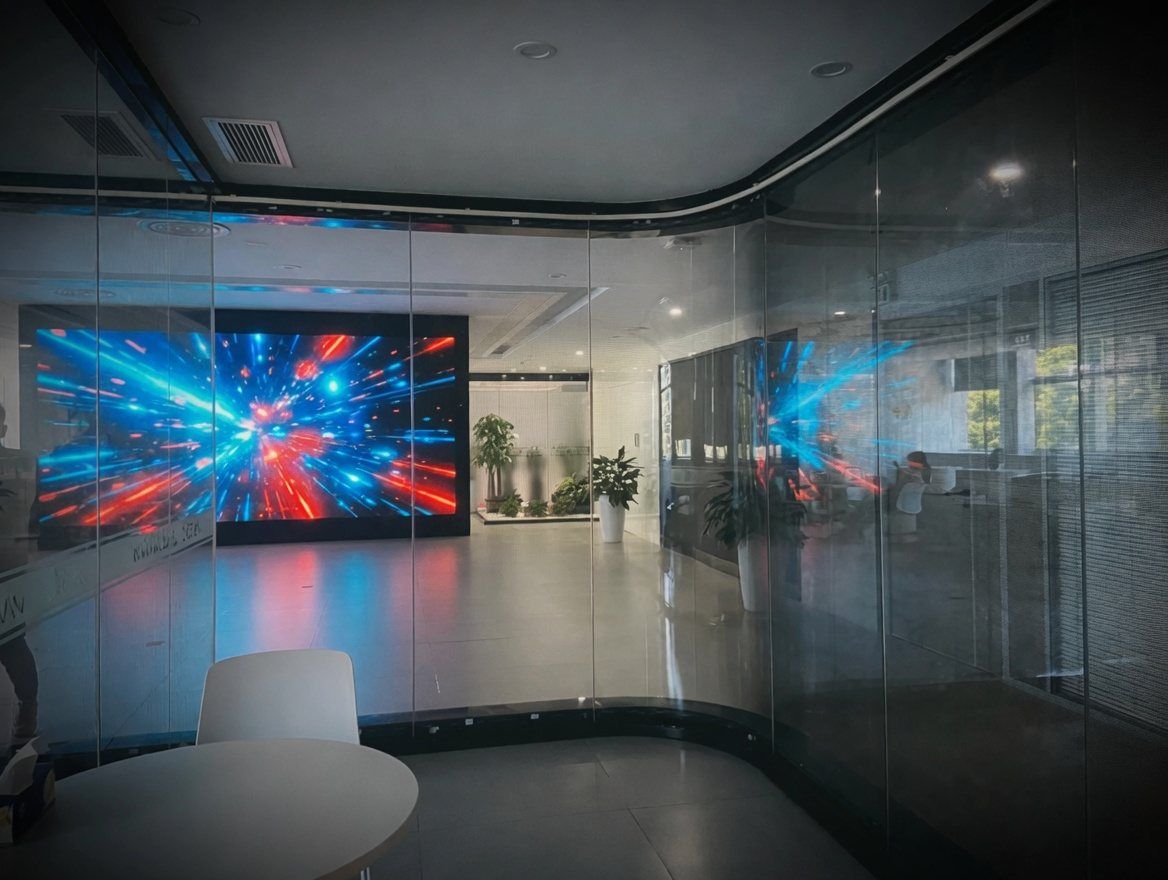
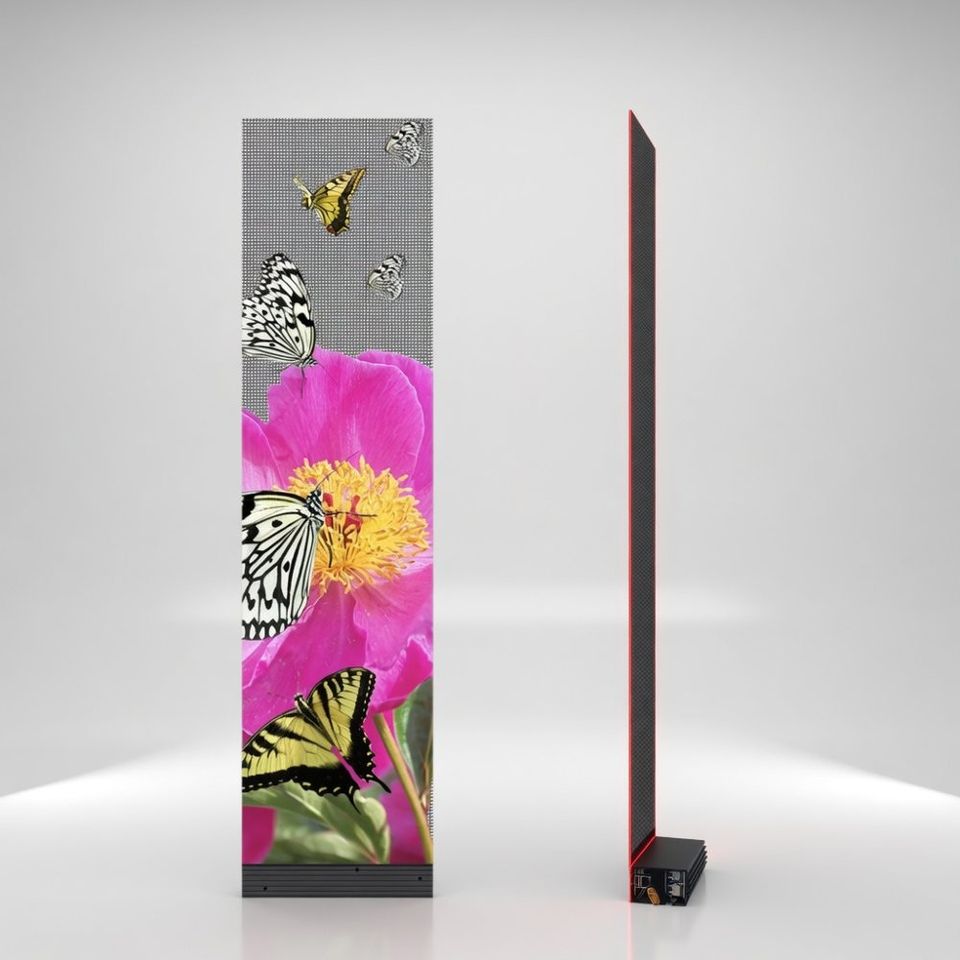
Panel construction, and the same technology running on a real curved glass partition — photographed, not rendered.
Installed
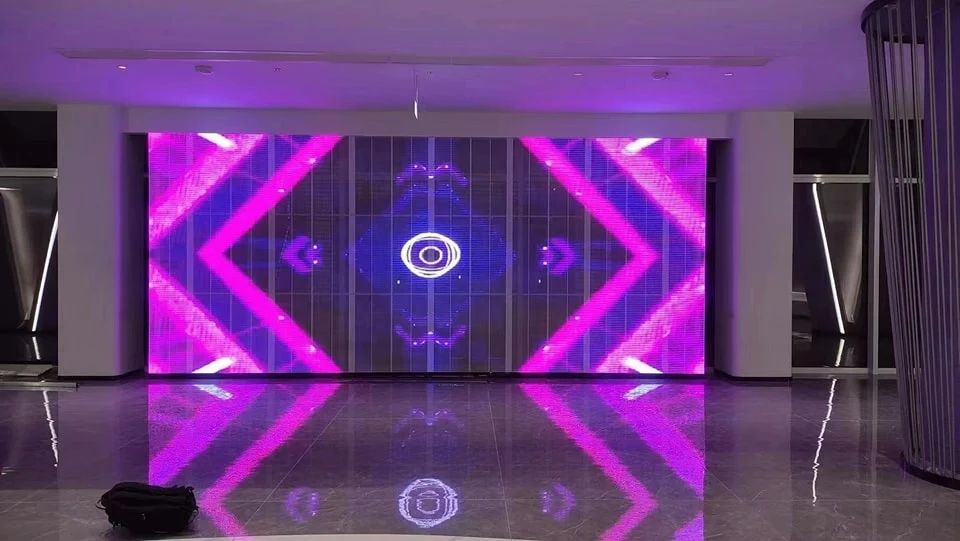
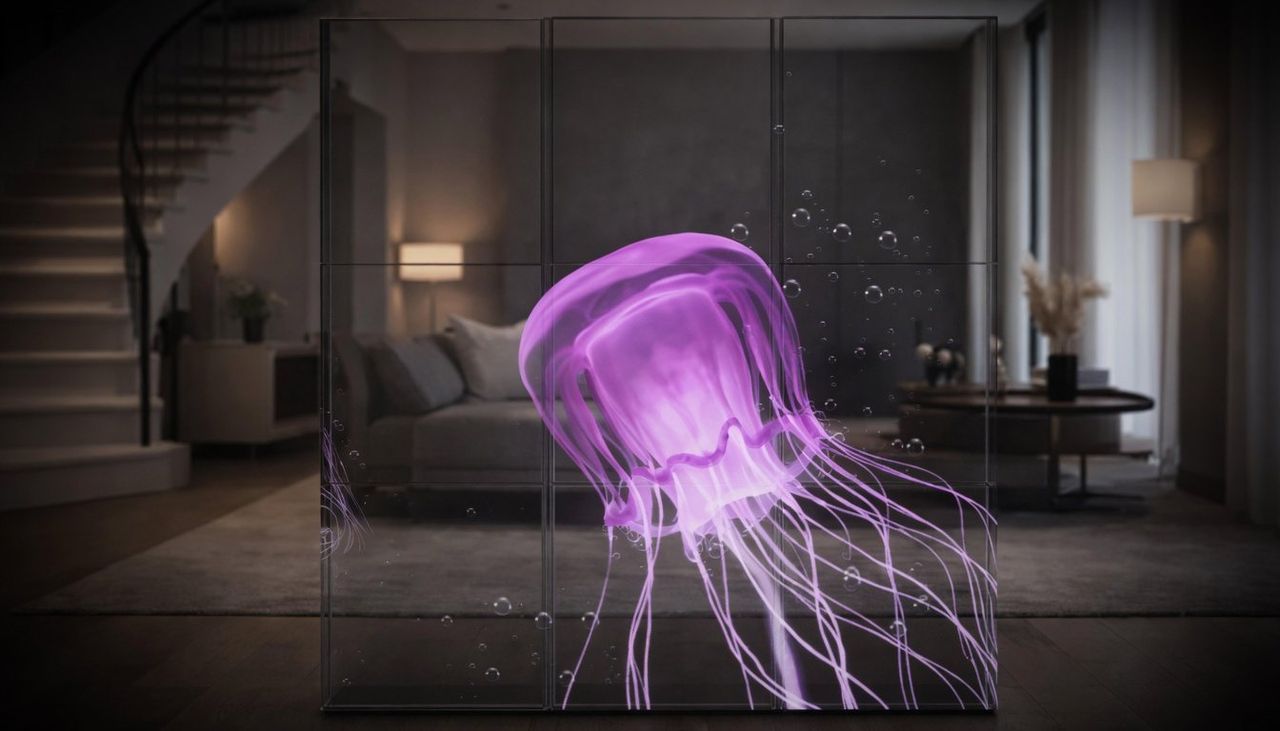
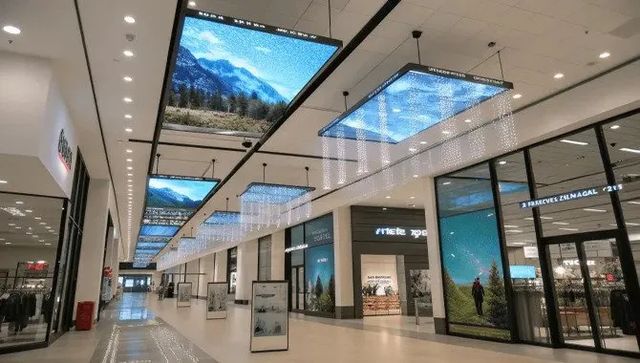
Manufacturer installations and SmarTech visualisations across retail, corporate, hospitality and event environments.

The range
The right transparent LED film or panel comes down to your glass, your viewing distance and how much of the view you refuse to give up.
Flexible film
Under 2 mm thick at about 6 kg/m² and 80–95% transparent. Hangs behind glass with no steel structure, bends around curves and splices seamlessly to 3 m.
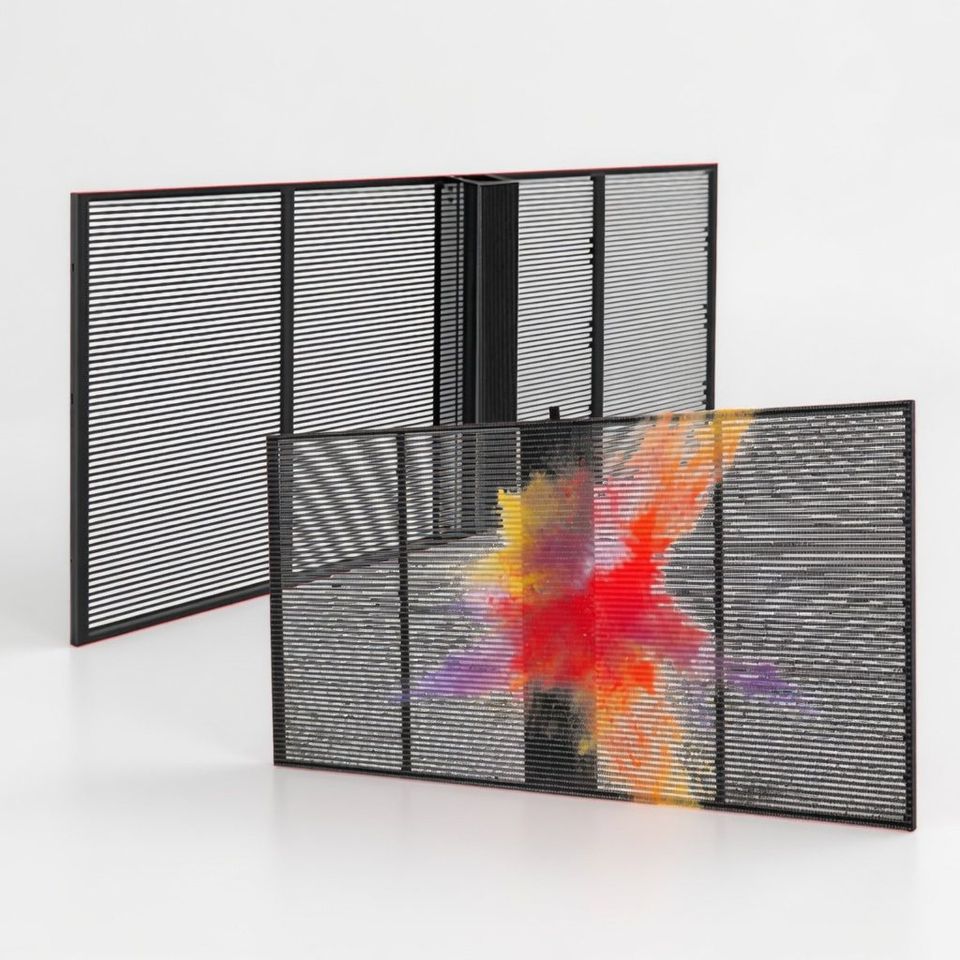
Rigid mesh
LED strips in aluminium frames on 500 × 1000 mm cabinets, 55–70% transparent at 4,000–5,500 nits. The workhorse for big windows, atriums and 5–30 m viewing.
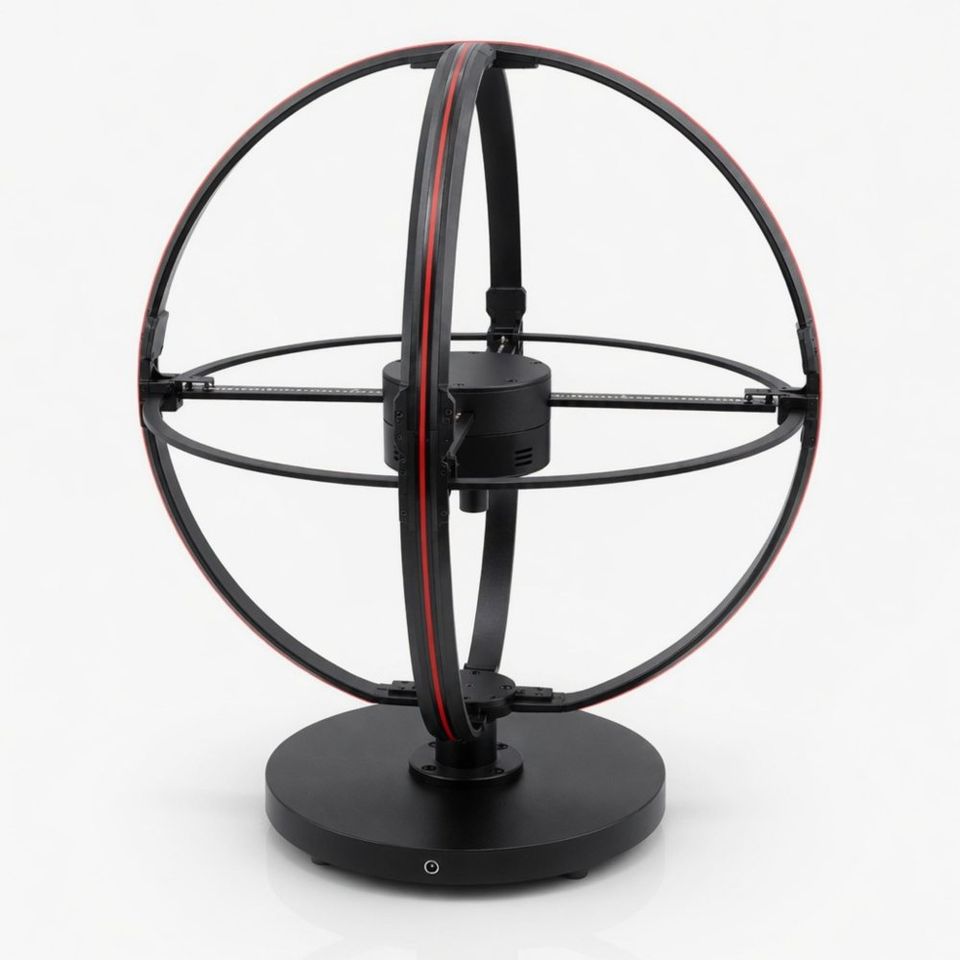
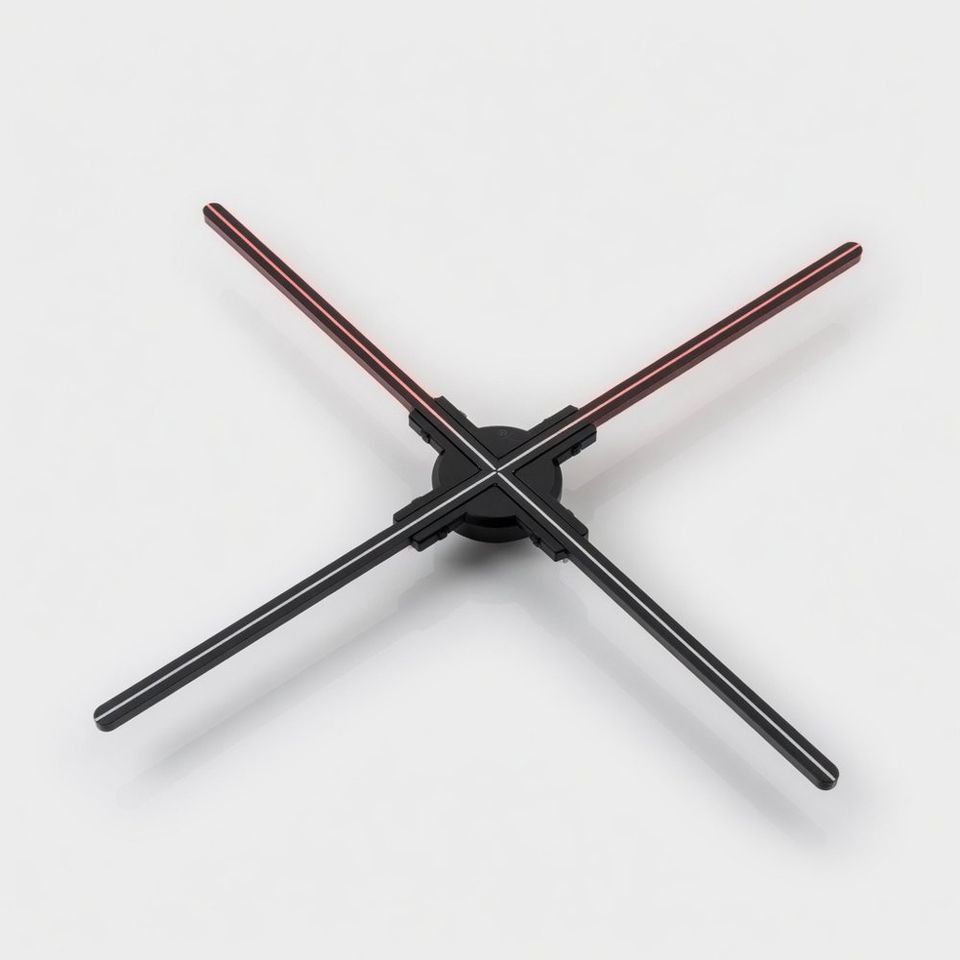
Mid-air 3D
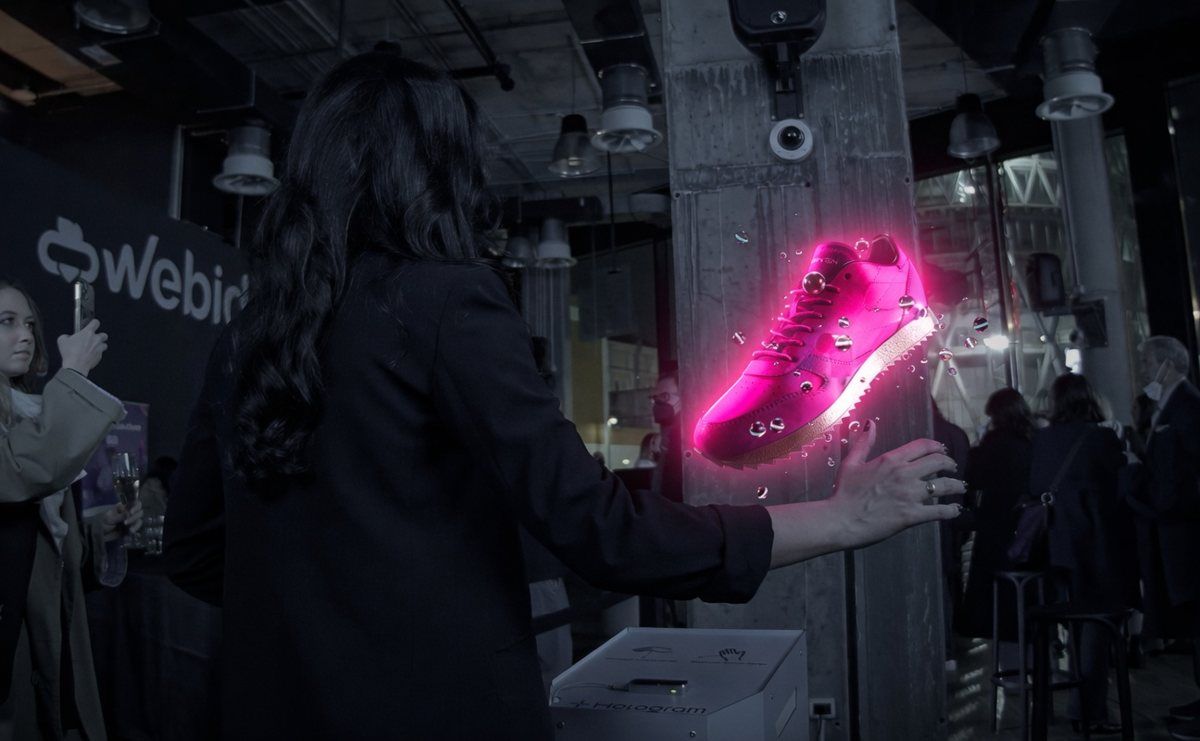
Spinning LED blades make a logo or product appear to float in mid-air. 30–200 cm diameters, single units or synced walls, controlled from an app.
Specifications
Sizing rule of thumb: minimum viewing distance in metres ≈ pixel pitch in millimetres. Daylight-facing storefronts need 3,000+ nits, and tinted glass pushes that higher.
| Specification | Flexible film | Mesh panels | Hologram fan |
|---|---|---|---|
| Transparency | 80–95% | 55–70% | Background fully visible |
| Brightness | 3,000–4,500 nits (5,000 premium) | 4,000–5,500 nits | Up to ~3,200 nits |
| Pixel pitch | P3.91 / P6.25 / P10 | P3.91 / P7.81 | 224–1,800 px per rotation |
| Weight | ~6 kg/m² | ~10 kg/m² (framed) | 1.5–15 kg per unit |
| Thickness / size | Under 2 mm | 75–100 mm frame | Blade Ø 42–200 cm |
| Refresh rate | 3,840 Hz | 3,840 Hz | 30–60 fps |
| Power (average) | ~200 W/m² | ~220 W/m² | 40–150 W per unit |
| Rated lifetime | 100,000 h | 100,000 h | 50,000 h motor and LED |
| Control | Novastar / Colorlight — cloud, 4G, Wi-Fi, USB | Same | App, Wi-Fi, cloud CMS |
| Warranty | 3 years | 3 years | 2 years |
Budget guidance: flexible film $1,899/m² (P6.25) to $3,499/m² (P3.91) at retail; mesh $2,500–3,200/m² installed-market; hologram fans from a few hundred dollars to around $5K for premium synced systems. A typical small storefront project lands at $10K–20K all in, quoted against a written spec.
Why it wins
Up to 95% transparency means your merchandising, your daylight and your view survive. A solid LED wall in the same opening kills all three.
Film installs mount to the existing frame with no steel. Landlords, heritage frontages and glass curtain walls all clear far more easily.
Animated content in a window tends to draw more attention than printed graphics — and it changes in seconds instead of a reprint cycle.
3,840 Hz refresh means no banding on phone video or broadcast cameras. Essential anywhere customers film.
Push one campaign to every storefront you operate from a single dashboard, scheduled by daypart, with local override where you need it.
Strip- and module-level replacement with 5% spares stocked per project. No scaffolding, no screen-wide swap-outs.
Where it works
Anywhere the view through the glass is worth as much as the message on it — retail, hospitality, showroom or corporate.
FAQ
Yes. From inside you look through the back of the screen to the street. Transparency runs 55% on dense mesh up to 95% on wide-pitch film — the higher the transparency, the wider the pixel pitch and the further back your audience needs to be.
We spec 3,000+ nits against your glass orientation and tint, and up to 6,000 for direct-sun frontages. Low-E and tinted glazing can absorb around a third of the output, which is exactly why we ask for a photo of the actual window before putting a brightness figure in writing.
Roughly 200 W/m² on average content — a 4 m² window is about one domestic space heater. Peak white draws roughly double that, so we specify a dedicated circuit sized to peak, not average.
Film is thin, light, flexible and hangs off the frame — best for existing glass, curves and installs where nobody wants structure. Mesh is a framed cabinet system: less transparent but brighter and more robust, better for very large spans, outdoor-facing curtain walls and permanent architectural integration.
Hologram fans create a genuine floating 3D effect in mid-air and draw a crowd, but they show one object on a dark background rather than full-frame content, and they need dim ambient light to read well. Most clients run fans at an entrance or a stand as an attention device and transparent film for the actual campaign.
Window-facing motion content can count as regulated signage in some municipalities, and listed frontages have separate rules. We run the check during quoting so any restriction shows up before you commit.
Stock film and fan configurations ship in days. Custom-cut film and framed mesh typically run 20–25 business days from confirmed measurements, plus freight. We confirm dates in the quote and flag anything that would miss a store opening.
Send a photo and the width of the window. You get a written, site-specific spec and a budget range back — free, no obligation.
Get a quote
Within one business day: recommended family, pixel pitch, brightness, transparency grade, load on glass and a budget range for your exact opening.
No formal RFQ required to start the conversation. Send a photo of the glass or a rough size — that is enough for a first spec.