
Museums & exhibitions
Put the label on the glass, not next to the object.
Wall text pulls visitors away from the artefact. Transparent LED in the vitrine glass layers interpretation directly over it — and switches off completely when the gallery wants silence.
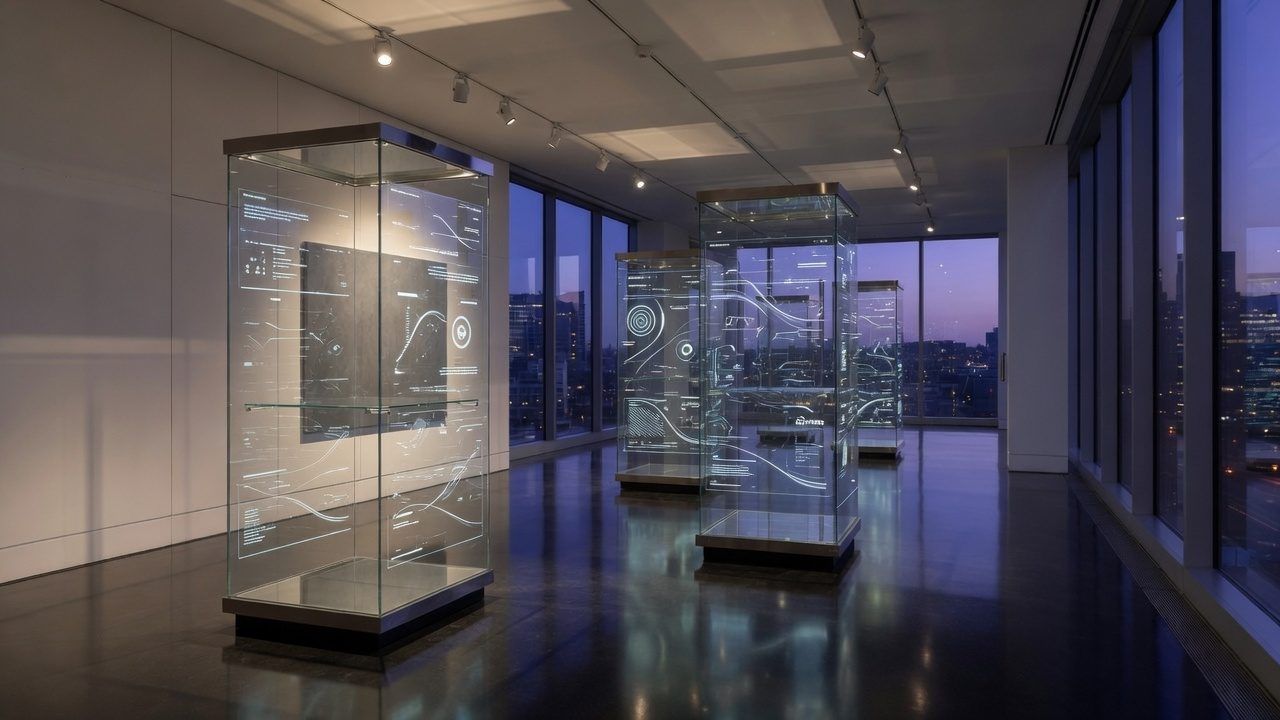
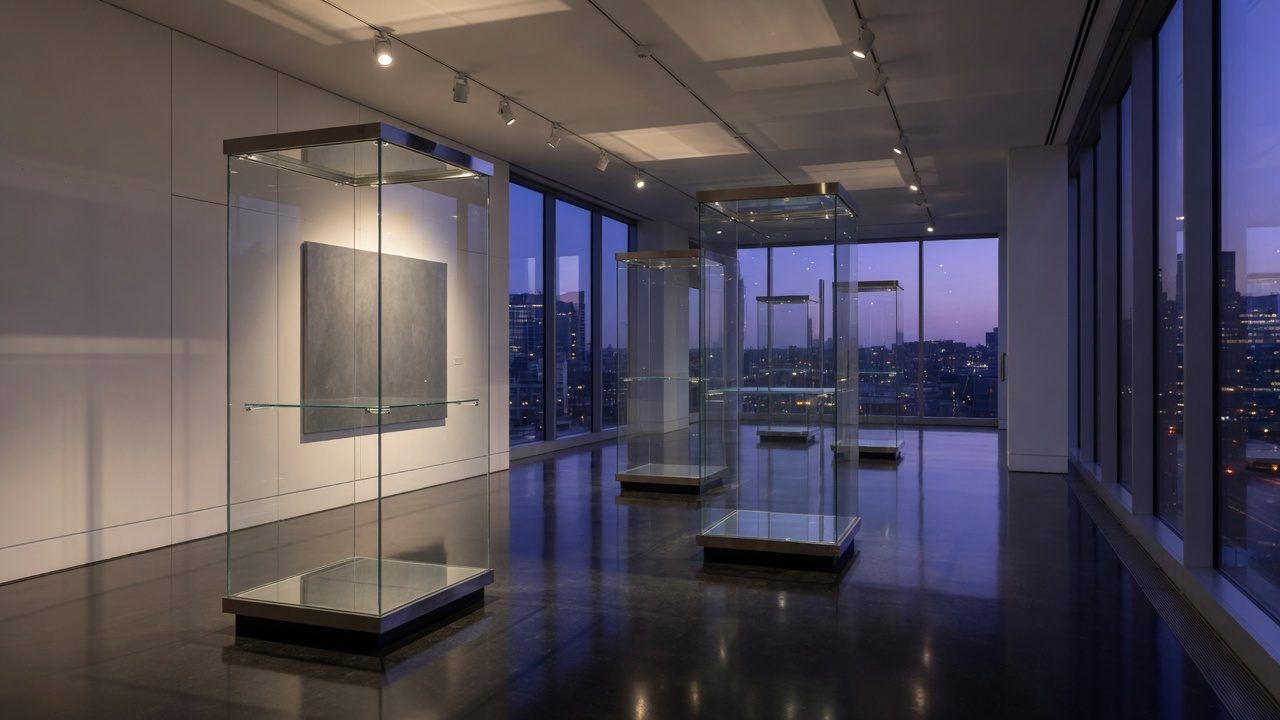
Off, it is a vitrine. On, it is an interpretive layer. The object never leaves view.
The brief
What a gallery install actually involves
Museum work is conservation-first. Screens near objects must control heat, ultraviolet and light spill, and mounting cannot involve drilling anything historic. We mount into the case structure or a free-standing frame and keep the display physically separated from the object envelope.
Exhibition schedules are unforgiving, so we build to your install window, not the factory's convenience — and design for content that changes with each exhibition rather than a fixed permanent display.
- Typical productP2.6–P3.91 film, high contrast
- Typical sizeVitrine panels 0.8–2 m wide
- ConservationLow heat output, no UV, controlled light spill
- ContentMultilingual interpretation, layered per exhibition
- ReconfigurablePanels demount and move between exhibitions
Before you buy
Four things to check before a gallery install
Conservation, contrast and touring schedules drive every decision here.
What are the conservation limits?
Heat, UV and lux limits for the objects come first. We provide output and thermal figures for the conservator before anything is specified.
How dark is the gallery?
Low ambient light means low brightness and high contrast — a bright commercial spec would wash out the room and the object.
Permanent or touring?
Touring exhibitions need demountable, reusable panels with travel cases, not a fixed install.
How many languages?
Multilingual interpretation changes the content workflow and often the layout. It belongs in the design, not in a retrofit.
Typical uses
Where museum screens work
- Display vitrines
- Gallery partitions
- Touring exhibitions
- Visitor centres
- Science centres
- Heritage sites
- Corporate brand museums
- Aquarium & zoo interpretation
- Trade-show stands
- Auction house previews
Recommended product: Holographic & transparent LED — layers interpretation directly over an artefact without hiding it, and hologram fans add mid-air 3D for objects that cannot be displayed
FAQ
Questions from this kind of project
Is it safe near sensitive objects?
With the right specification, yes. Transparent LED emits no ultraviolet and runs cool at gallery brightness levels, and we keep the display outside the object's own microclimate. We supply thermal and output figures for the conservator to review before anything is ordered.
Can the same screens be reused for the next exhibition?
Yes, and for touring work that is the point. Panels demount, travel in cases and remount in a new configuration. Content is per-exhibition, so only the media changes.
How do hologram fans fit into a gallery?
They earn their place where the object cannot be displayed — too fragile, on loan, or lost. A hologram fan shows a rotating 3D reconstruction floating in mid-air, which reads well in a darkened interpretation space and draws visitors down a route.
Can it handle multiple languages?
Yes. Content can cycle languages automatically or switch on visitor input. Because it is a screen rather than printed text, adding a language later costs nothing in production or reprinting.
Other environments
Get a quote
Spec my gallery
Send us the case dimensions, your conservation limits and the exhibition dates, and you get output and thermal figures, a mounting method and a budget range in return.
No formal RFQ required to start the conversation. Send a photo of the glass or a rough size — that is enough for a first spec.
- Emailbusiness@smartechllc.tech
- Phone+1 (860) 899-8069
- Address19920 Hwy 99 Ste A, Lynnwood, WA 98036
- HoursMon–Fri, 9am–5pm PT · Reply within one business day