
Retail windows
Your window is the best media you own. Start using it.
A vinyl covers the window. A transparent screen keeps it — and adds motion on top. Same glass, same merchandising, plus a campaign you can change from a phone.
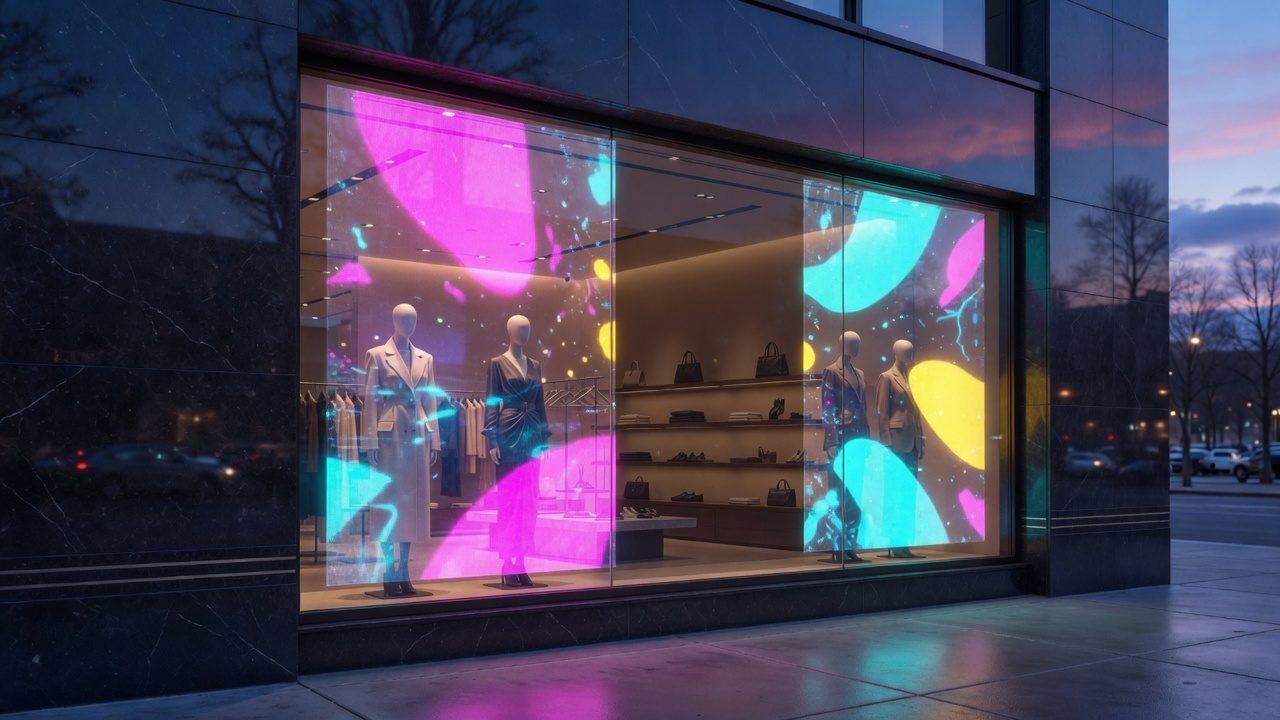
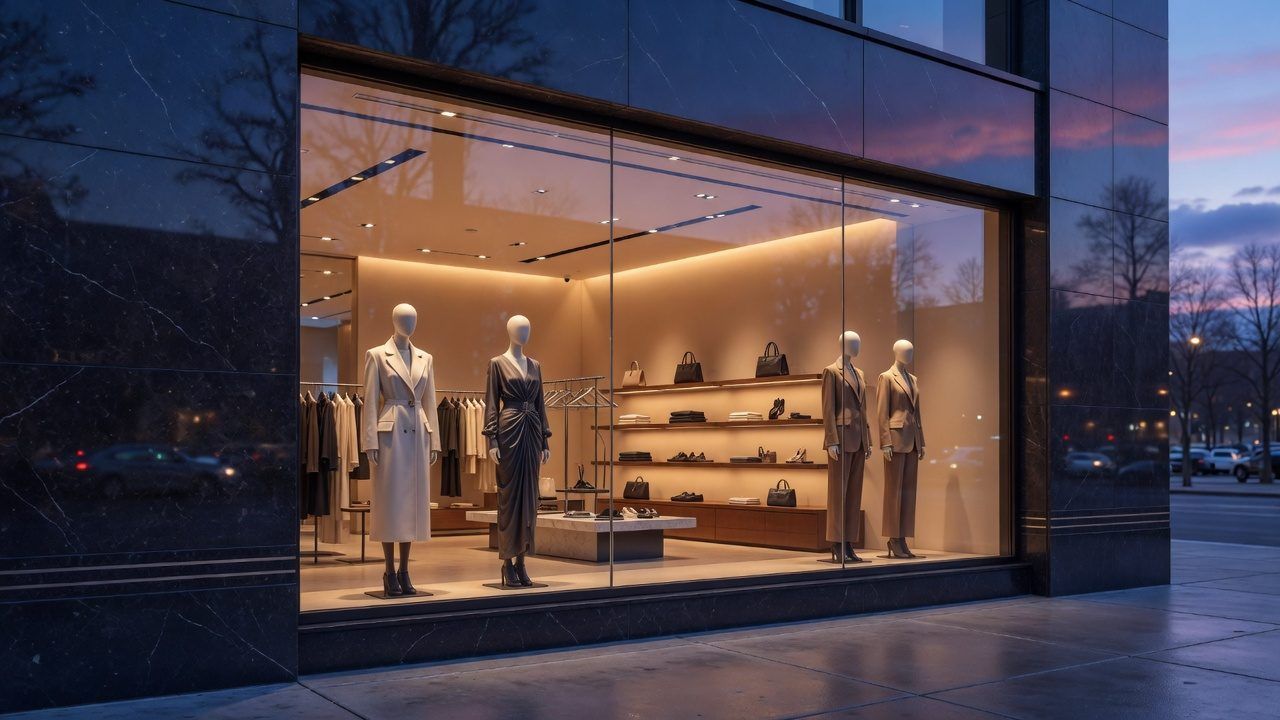
Same window, same camera position, screen off and on. Drag to see what your customers would see.
The brief
What a transparent LED window install actually involves
Most storefronts take transparent LED film on the inside face of the glass: no drilling, no structure, no shopfitting. We survey the opening, order factory-cut panels to those exact dimensions and fit outside trading hours — a typical 3 × 2 m window is live before you open the next day.
The decisions that matter are pitch and brightness. A window read from across a 6 m pavement wants P6.25 at 3,000+ nits; a mall unit seen from 4 m can go finer. Tinted or low-E glass pushes brightness up, which is why we ask for a photo before quoting.
- Typical productP6.25 adhesive film, 94% transparency
- Typical size2–6 m wide × 1.5–2.5 m high
- Load on glass1–3 kg/m² — about 18 kg on a 3 × 2 m window
- InstallSame day, outside trading hours
- Hardware budget$8,800–18,900 for a 3 × 2 m window
Before you buy
Four things to check before you buy a window screen
These are the questions that decide whether the install still looks right in three years.
Which way does the glass face?
Direct all-day sun rules out adhesive film — heat kills the bond. South-facing frontages need behind-glass film on standoffs or mesh instead. We will say which.
How far back does the viewer stand?
Pavement width sets pixel pitch. Metres of viewing distance ≈ millimetres of pitch. Paying for a finer pitch than your street needs is wasted money.
Is the window tinted?
Low-E and tinted glazing can absorb around a third of the brightness. It changes the nit spec, not the product — but only if someone checks first.
Do you own the frontage?
Leaseholders need a removable system. Film peels off and leaves clean glass, which is usually what gets the landlord's signature.
Typical uses
Who puts screens in their windows
- Fashion boutiques
- Jewellery & watches
- Phone & electronics stores
- Pharmacies
- Estate agents
- Travel agents
- Bank branches
- Opticians
- Cosmetics retail
- Franchise chains
Recommended product: Self-adhesive LED film — goes on the inside of existing glass in hours, keeps up to 95% of the view and comes off cleanly at the end of the lease
FAQ
Questions from this kind of project
Will it block the view into my shop?
No — that is the whole point of choosing a see-through LED display over a solid screen. At 94% transparency the mannequins and shelving behind the glass stay clearly visible, as the slider on this page shows. From inside, staff still see the street through the back of the screen.
Can I run different content in each store?
Yes. Every screen runs on one cloud CMS with scheduling by daypart. Head office pushes the national campaign, and individual stores can override it for local promotions or opening hours.
What does a typical shop window cost?
A 3 × 2 m window in adhesive film is roughly $8,800–18,900 in hardware depending on pitch, plus install. If you want to prove the concept first, a plug-and-play kit starts at $389 for a single small panel.
Will the landlord allow it?
Usually — nothing is drilled and nothing is permanent. The film bonds to the inner face of the glass and peels off cleanly at lease end. We provide the load figures — 1–3 kg/m² — which is exactly what most landlords and their surveyors want to see.
Other environments
Get a quote
Spec my shop window
Send the width, the orientation and a photo. Back comes a written spec — pitch, brightness, layout, load — and a fixed budget range.
No formal RFQ required to start the conversation. Send a photo of the glass or a rough size — that is enough for a first spec.
- Emailbusiness@smartechllc.tech
- Phone+1 (860) 899-8069
- Address19920 Hwy 99 Ste A, Lynnwood, WA 98036
- HoursMon–Fri, 9am–5pm PT · Reply within one business day