Displays
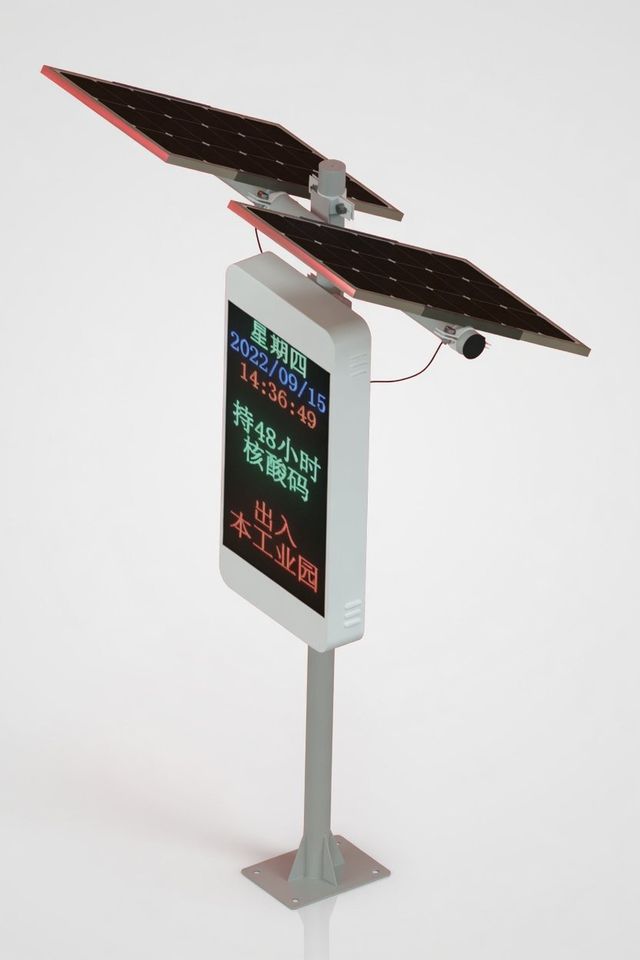
Solar LED signs
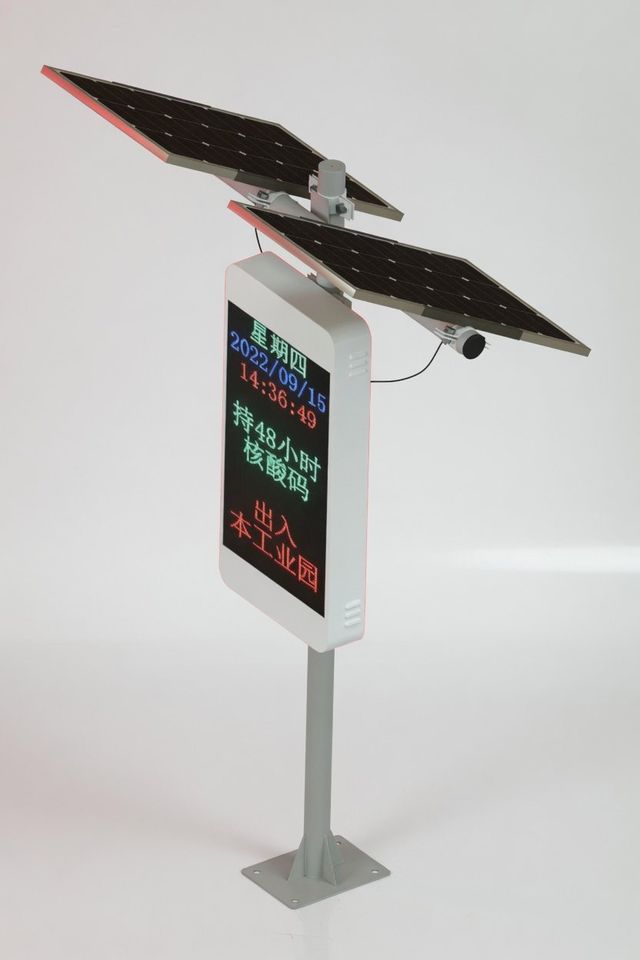
Outdoor LED display panels with PV and LiFePO4 storage. 5,500–6,000 nits, IP65, −25 to +65 °C, with solar and utility auto-changeover.

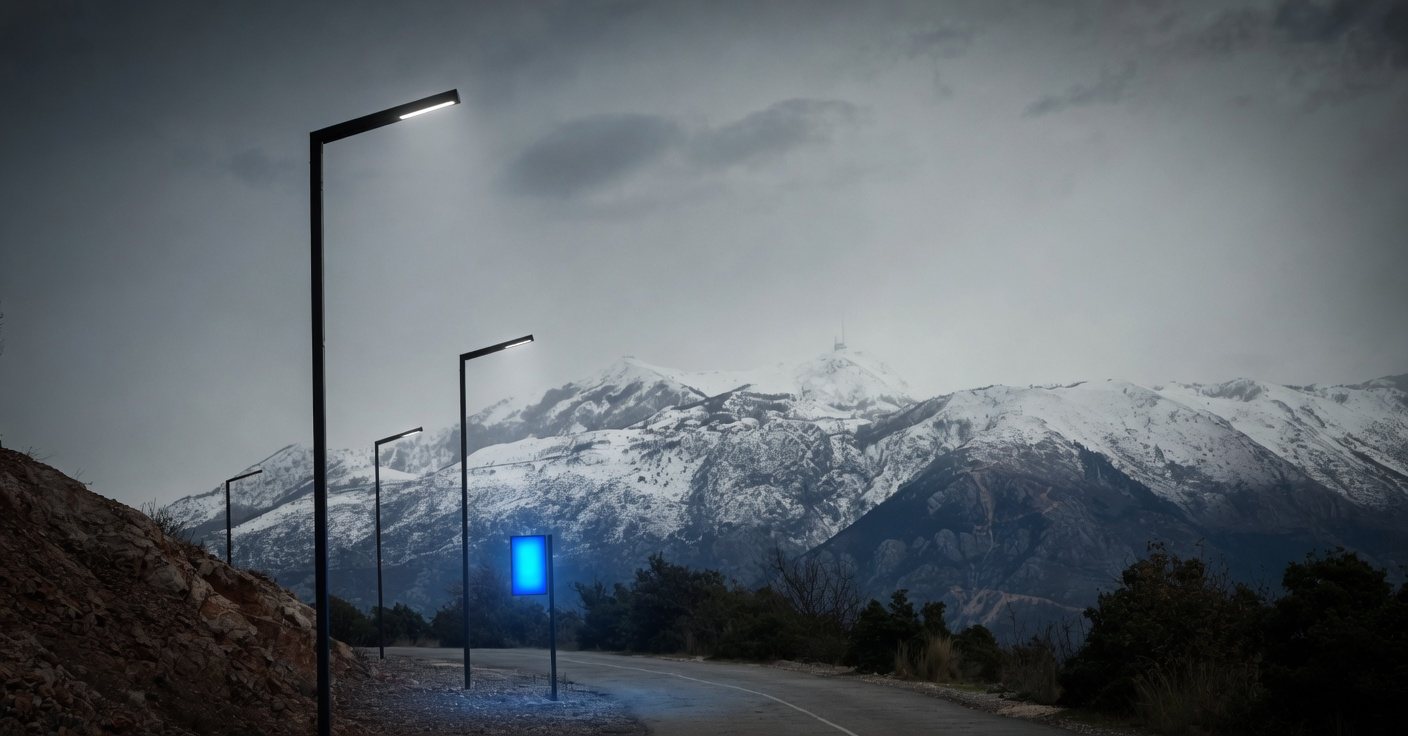
Off-grid solar LED displays and lighting for sites where trenching power costs $5K–20K — or simply is not possible. Powered by the sun, bright enough to light up the night.
What it is
A photovoltaic array, a LiFePO4 battery and a controller, sized as one system with the load they serve. Where a grid connection means trenching a car park or a highway verge, the solar version bolts to a pole in an afternoon and never sees a meter.
Honest engineering
The most common failure in solar signage: a system sized on July sun that browns out in January. We size against your latitude's worst-month irradiance and put the assumptions — daily load, autonomy days, recovery time — in the proposal where you can hold us to them.
The range
Displays, lighting and traffic products on the same storage platform.
Displays
Outdoor LED display panels with PV and LiFePO4 storage. 5,500–6,000 nits, IP65, −25 to +65 °C, with solar and utility auto-changeover.
Lighting
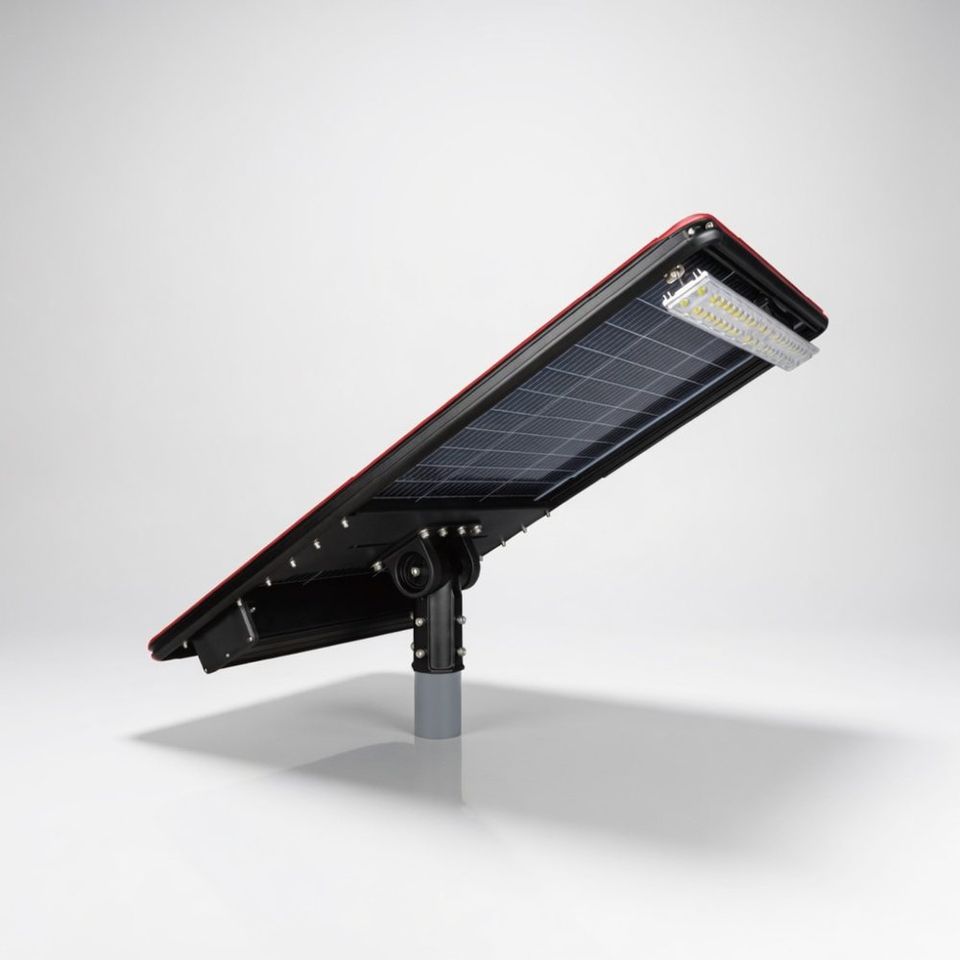
All-in-one 30–300 W with panel, battery and LED integrated. Microwave motion dimming, 12 h per night with 3–5 rainy-day autonomy.
Traffic
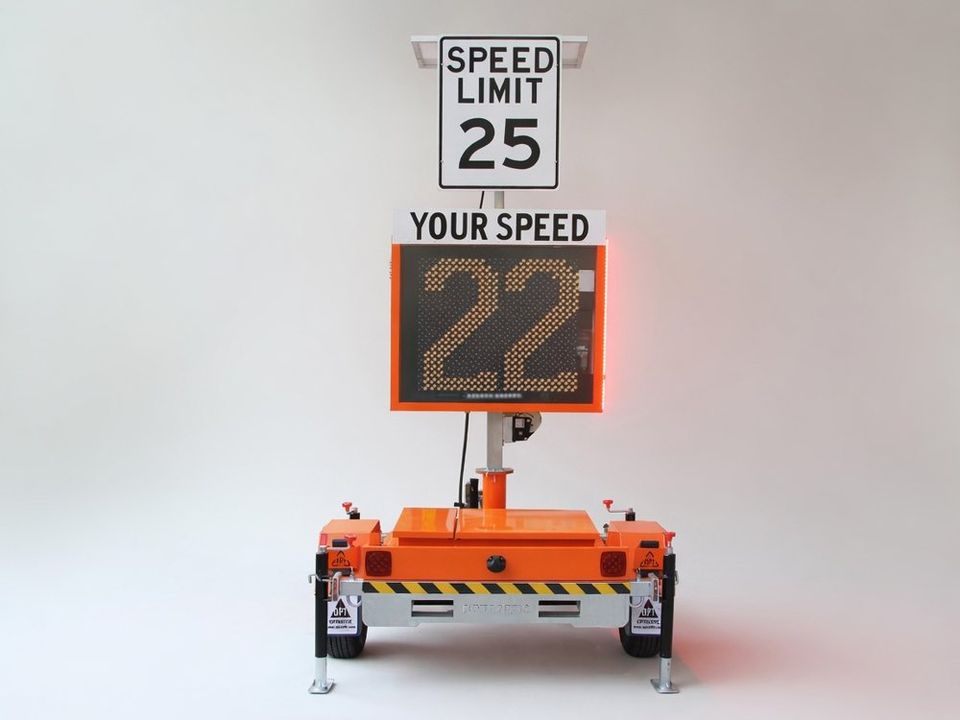
Solar radar speed signs for school and work zones, built to MUTCD requirements, trailer or pole mounted, with 4G fleet management and GPS.
Billboards
Solar flood kits for static boards and fully solar digital signage in small formats — HOA monuments through to highway advertising.
Specifications
Everything below is sized per site. The numbers here are the reference design we start from and then adjust for your latitude, orientation and duty cycle.
| Specification | Display sign (per 440 × 1000 mm panel) | All-in-one street light |
|---|---|---|
| Load / power class | 150 W max, 50–80 W average | 60–300 W |
| Solar array | 2 × 100 W monocrystalline | Mono >23% efficiency, adjustable tilt |
| Battery | 12.8 V 100 Ah (1,280 Wh) LiFePO4 | LiFePO4, 2,000+ cycles (5–10 yrs) |
| Autonomy | 32 h+ with no sun, 8–12 h recharge | 12 h per night, 3–5 rainy days |
| Output | 5,500–6,000 nits · 3,840 Hz | 170–190+ lm/W (tier-1 LED chips) |
| Sensors / control | Auto-changeover to utility, 4G scheduling | 10 m microwave motion, auto-dim |
| Environment | IP65 · −25 to +65 °C | IP66 · IK09 · 10 kV surge |
| Mounting | Pole or wall, anti-theft battery box | 6–9 m pole, wall or arm |
| Warranty | 3 years + 5% spares | 3–5 years |
Buying note: municipal and DOT work is bid-driven and needs MUTCD compliance — the longest cycle but the stickiest contracts. Private and rural buyers close fast when the alternative is a $5K–20K trench. Solar incentives can cut project cost 10–25%, and we flag what applies in your region in the quote.
Why it wins
Autonomy, load and recovery calculated against worst-month sun and written into the proposal, not assumed from summer performance.
2,000+ cycle packs that last 5–10 years, against roughly two years for the lead-acid hiding inside budget imports.
All-in-one units bolt straight onto existing poles. No trenching, no cable runs, no utility connection paperwork.
4G and GPS on traffic products: brightness, schedules, battery health and location monitored from one dashboard.
Locked battery compartments and pole-integrated storage on public deployments, because exposed batteries walk.
Display signs change over to utility power automatically where a supply exists, so a bad weather week never blanks the screen.
Where it works
Typically where a power connection costs more than the display itself.
FAQ
The reference display design runs 32+ hours with zero sun and recharges in 8–12 hours. Street lights carry 3–5 rainy-day autonomy at full schedule. Your site's figures are calculated from local irradiance data and written into the spec.
It is the single biggest quality difference in solar products. LiFePO4 delivers 2,000+ cycles, which is five to ten years of nightly use. The lead-acid packs inside cheap imports typically die at around two years — usually just after the warranty. Battery type is the first line of every SmarTech solar quote for that reason.
That is exactly what we size for. We use your latitude's worst-month solar data rather than an annual average, and we state autonomy days, daily load and recovery time in the proposal. If the maths does not close for your site — deep shade, far north, 24-hour duty — we tell you before you order instead of after.
Our radar speed and school-zone signs are built to meet MUTCD requirements and come with 4G fleet management, suitable for municipal and DOT procurement. Test and compliance documentation is available for bid submissions on request.
Panel cleaning once or twice a year in dusty locations, and a battery replacement at the end of its cycle life — typically year seven to ten. There is no lamp to change and no cabling to inspect. Fleet-managed units report battery health remotely so a failing pack surfaces before it strands a site.
Sometimes. It depends on the display's average and peak draw and whether it can accept DC input or needs an inverter. Send us the model and duty cycle and we will calculate whether a retrofit is economic or whether replacing the head is the better spend.
Tell us the location and the load. We size the solar array, battery and autonomy for you, free.
Get a quote
Within one business day: panel wattage, battery capacity, autonomy days and winter recovery time for your exact location — in writing.
No formal RFQ required to start the conversation. Send a photo of the glass or a rough size — that is enough for a first spec.